Original source
My Second Day in China and I Can’t Believe My Eyes
Guangzhou & Shenzhen: Exploring China's Modern Infrastructure by High-Speed Rail
On my second day in Guangzhou, I decided to explore the older part of the city — which is still far more modern than any Western city I’ve ever visited. I was genuinely impressed by how clean and spotless Beijing Pedestrian Street was — not a single cigarette butt on the ground.
I didn’t just find...
On my second day in Guangzhou, I decided to explore the older part of the city — which is still far more modern than any Western city I’ve ever visited. I was genuinely impressed by how clean and spotless Beijing Pedestrian Street was — not a single cigarette butt on the ground. I didn’t just find lots of shops here, but also super modern malls and beautiful temples. Of course, I had to try the local food for lunch, and luckily, the lady spoke some English and helped me modify it to be vegetarian (or what I call vegetarian enough for China). The next day, I caught a bullet train to Shenzhen. And just like the cities, Chinese railway stations are huuuge — as big as airports and incredibly modern. The country’s infrastructure is truly next level.
Cori Ander's China adventure continues! Her second day in Guangzhou showcased a blend of ancient and modern, from spotless streets and impressive malls to serene temples. A delicious vegetarian-ish lunch was followed by a high-speed rail journey to Shenzhen. Prepare to be amazed by the sheer scale and modernity of China's infrastructure, from bustling pedestrian areas to enormous railway stations.
On my second day in Guangzhou, I decided to explore the older part of the city — which is still far more modern than any Western city I’ve ever visited. I was genuinely impressed by how clean and spotless Beijing Pedestrian Street was — not a single cigarette butt on the ground. I didn’t just find lots of shops here, but also super modern malls and beautiful temples. Of course, I had to try the local food for lunch, and luckily, the lady spoke some English and helped me modify it to be vegetarian (or what I call vegetarian enough for China). The next day, I caught a bullet train to Shenzhen. And just like the cities, Chinese railway stations are huuuge — as big as airports and incredibly modern. The country’s infrastructure is truly next level.
This video follows Cori Ander's exploration of Guangzhou and her journey to Shenzhen via China's high-speed rail system. In Guangzhou, Cori is struck by the cleanliness of Beijing Pedestrian Street, noting the absence of litter and the constant cleaning efforts. She explores shops, both familiar and uniquely Chinese, and discovers a layout of the ancient city, marveling at the preserved remains of the city walls amidst the modern development. The video highlights the prevalence of electric scooters and the modern architecture, contrasting it with a beautifully preserved traditional building with unique architecture.
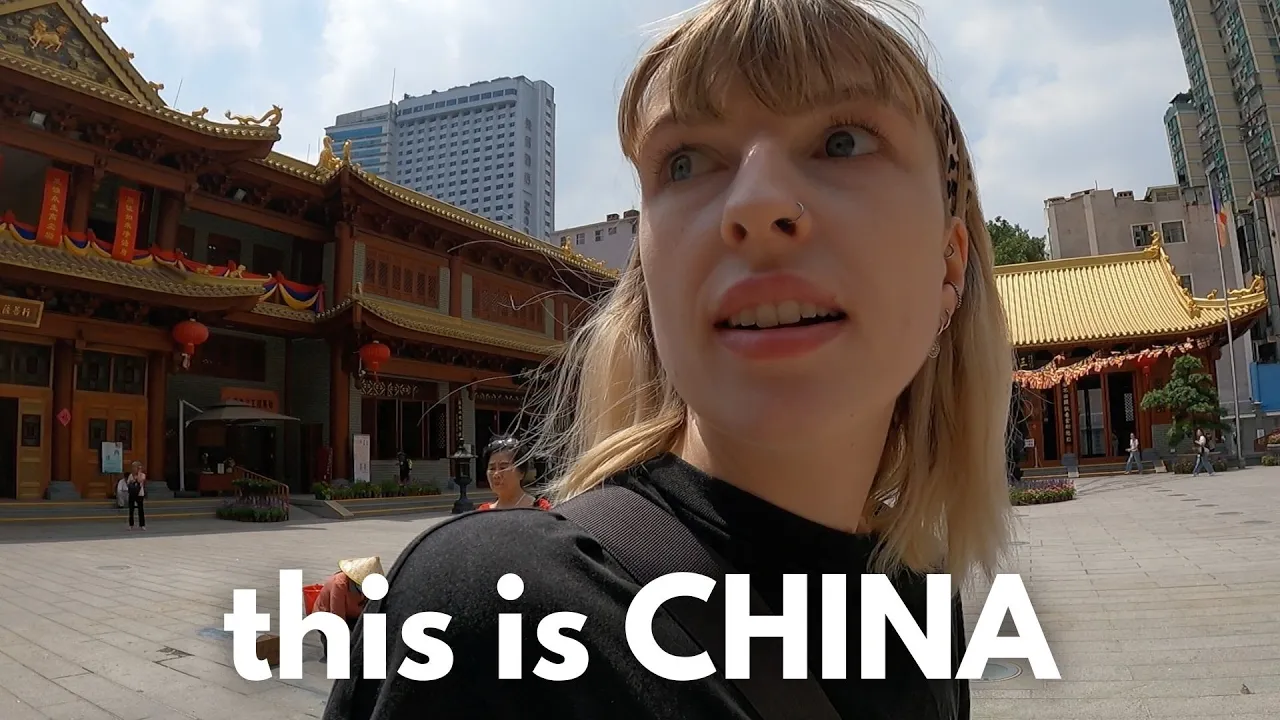
Finding vegetarian food proves challenging, but Cori successfully communicates her dietary needs to a vendor and enjoys a delicious bowl of noodle soup. The video showcases the vibrant atmosphere of the pedestrian street, with its LED screens, pop-up shops, and a large plaza with a modern mall. Cori visits the Grand Buddha Temple, a temple with a history of over 1000 years, admiring its architecture and observing a prayer ceremony. She also notes the temple kitchen offering affordable meals.
The second half of the video documents Cori's experience using the metro and navigating Guangzhou East Railway Station, emphasizing its size and modern amenities. The sheer scale of the station is highlighted, along with the ease of navigation thanks to clear signage in both Mandarin and English. Cori details the process of purchasing a metro ticket and boarding the high-speed train to Shenzhen. She observes the various food and drink options available at the station, noting some unusual items like chicken feet snacks and prototype chicken breast. The video concludes with Cori's arrival in Shenzhen, ready to explore the city in her next video. Throughout, Cori's observations highlight the blend of ancient history and modern development, the cleanliness of the cities, and the efficiency of China's transportation system.
Join Cori Ander for an unforgettable journey through Guangzhou, China! Witness the spotless streets, explore ancient temples, and savor the local cuisine. Cori's adventure continues with a high-speed train ride to Shenzhen, showcasing China's impressive infrastructure. Get ready for a captivating exploration of culture, history, and modern marvels!
Cori Ander explores Guangzhou's vibrant streets and temples, then takes a bullet train to Shenzhen, marveling at China's incredible infrastructure and modern cities.
Guangzhou & Shenzhen Exploration: High-Speed Rail & Modern Marvels
2:10 Guangzhou is spotless; not a single piece of trash on the floor. The city is incredibly clean, unlike many Western cities.
13:37 The temple kitchen offers affordable meals for around a dollar. Check if it's vegetarian before ordering.
15:59 Chinese train stations are massive, like airports. Allow extra time to navigate.
17:07 The metro is incredibly cheap in China. A ride costs only 2 yuan.
20:00 Stock up on food and drinks at the railway station mall before a long train journey.
26:39 Boarding for high-speed trains ends 5 minutes before departure. Arrive early to avoid missing your train.
28:24 China's train system is incredibly developed, modern, efficient, and affordable.
0:00 Day two in Guangzhou
0:38 Beijing Pedestrian Street
5:00 Vegetarian food search
8:39 Back to pedestrian street
10:20 Grand Buddha Temple
15:41 Travel to Shenzhen
16:18 Metro and train tickets
18:38 Guangzhou East Railway Station
22:09 Waiting for boarding
27:55 Arrival in Shenzhen
00:00 Welcome to Guangzhou
02:13 Beijing Pedestrian Street
05:00 Trying the local cuisine
08:22 Pedestrian area
09:37 Dafo Temple
15:41 Metro China
18:34 Navigating the Railway Station
22:08 Chinese kiosk delicacies
25:51 Taking the bullet trains
28:15 Arriving to Shenzhen
How easy is it to find vegetarian food in Guangzhou?
It's a struggle, but I managed to communicate my needs with a vendor using Google Translate.
What's the best way to get around Guangzhou?
I used the metro, which is super cheap and convenient. The train stations are huge, so allow extra time to navigate.
What was the most surprising thing about the train stations?
How big they are! They are as big as airports, and they have malls inside!
What's the food like at the train station?
They have everything, from beef jerky to cheese lattes, and even some unusual snacks like chicken feet and duck claws. There's even prototype chicken breast!