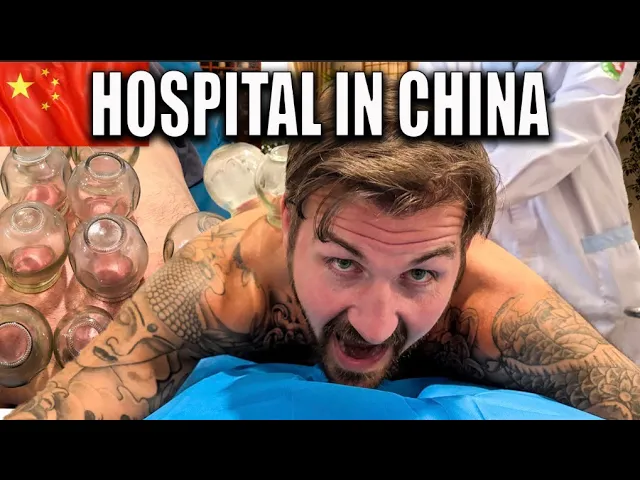
A British couple travels to Shenzhen to explore China’s modern hospital scene and follow a full brain MRI procedure at Hezheng Hospital International Diagnosis And Treat Center. They describe the check‑in process, the MRI environment, the technology on display, and their personal reactions to the care and efficiency observed in a fast‑developing Chinese healthcare system. The video blends travel storytelling with a healthcare tech tour, highlighting what it’s like to navigate hospital life as a foreigner in a high‑tech city. They mingle practical observations about logistics and patient experience with impressions of Chinese medical infrastructure and the pace of modern care. The overall message invites viewers to reconsider stereotypes about Chinese medicine and to see how a contemporary hospital operates in Shenzhen’s tech city context. Whether you’re curious about MRI procedures abroad or China’s healthcare capabilities, this video offers a detailed, ground‑level glimpse. What surprised them most is the interplay between advanced equipment and the patient journey from arrival to imaging, all set against Shenzhen’s futuristic backdrop. They close with a personal note about following the channel for future adventures.
A British couple explores Shenzhen’s modern hospital scene, following a full brain MRI at Hygien Hospital International Diagnosis And Treat Center. They compare
Travel Guides & Tips in this video
In a lively travelogue set in Shenzhen’s high tech heart, the couple from On Tour With Dridgers ventures into what they describe as a world of fast, futuristic hospitals. They aim to see how a brain MRI translates into modern care for a foreboding history of brain bleeds, a past boxing injury, and evolving health needs. The video opens with casual banter about the brain itself, the speed of the scan, and the contrast between UK wait times and China’s instant imaging. They walk into Hygien Hospital, an international center offering private and publicly supported care, and immediately notice the English speaking doctor who guides them through the process. The MRI machine, labeled 3T, emerges as a symbol of the era: rapid, quiet, and connected to a live display of the traveler’s brain images. They compare experiences with a decade-old MRI in the UK and marvel at the speed, the clear visuals, and the ability to see real-time results. Through Ben’s candid reflections on his past injuries, R
Next travel video:
Inside Shenzhen’s Futuristic Hospital: A Brain MRI in China
I traveled to Shenzhen — China’s most futuristic city — to get a real brain MRI scan and see what a modern Chinese hospital is actually like.
For any queries regarding medical treatments MRI or rehabilitation contact
People always say China is advanced… but what’s it really like inside one of its...
Exploring China’s Futuristic Hospitals: Brain MRI in Shenzhen’s High‑K
In this travel vlog, a couple from England tours Shenzhen, widely regarded as China’s most futuristic city, to step inside a high-tech hospital and witness a brain MRI from start to finish. The video promises a candid look at the entire process—from the check-in to being inside the MRI room—and compares China’s medical tech and hospital experience to Western expectations. The hosts, Reanne and Ben, document not only the machinery and procedures but also their reactions to the environment, staff, and overall patient flow in a modern Chinese healthcare setting. Shot in February 2026 at Hezheng Hospital International Diagnosis And Treat Center, the episode aims to answer questions about China’s medical system, hospital infrastructure, and the day-to-day realities of receiving MRI treatment abroad. They framing their adventure as part travel diary, part tech tour, inviting viewers to consider what life in a fast-growing Chinese city looks like beyond the headlines. The tone is curious and,
Attractions in this video: Greatwall, The Forbidden City, Ten Thousand Buddhas
More about the current video:(Published on 2026-02-27)
The video follows a British couple, Ben and Rian, as they seek a brain MRI in Shenzhen, a city they describe as the world’s most futuristic. Ben explains a personal history: two bleeds on the brain from a boxing period, vision loss, and recurring headaches. They note the contrast with the UK, where MRI results can take weeks, and celebrate instant imaging in China. Arriving at Hygien Hospital, they learn that foreigners can access private hospitals with public insurance, and that the hospital plans an English website. The MRI in the 3T machine is quick and shows live images of Ben’s brain, including specific views like sagittal and frontal sections. The doctor discusses the age and location of old bleeds, suggesting a cyst may form as healing progresses, a finding the couple process with a mix of relief and curiosity. They also visit the rehabilitation center, marveling at high-tech equipment and automated laboratories that speed up blood tests and report delivery. Throughout, Rian’s attentiveness with Ben’s safety is on display, from guiding him in crowded spaces to noting how the hospital’s transparency stands in contrast to Western norms. By the end, they reflect on the cost: private brain scans for foreigners and the convenience of integrated private-public healthcare in China, hinting at a future English site and more tech-forward adventures in Shenzhen. The piece blends medical curiosity with travelog storytelling, inviting viewers to rethink perceptions of Chinese healthcare through tangible, human experiences. The travelers sign off with a tease about upcoming episodes and a push to subscribe for the series finale aimed at exploring more futuristic China. The name Ben appears multiple times as the speaker sharing medical history and moments of relief during the scan.
FAQs (From the traveler's perspective)
Q: Is the brain scan expensive for foreigners?
A: For foreigners without insurance, the private brain scan can cost around 2000 yuan, while residents with insurance pay around 55 yuan.