Original source
Where ISLAM meets BUDDHISM I S2, EP108
Xunhua, China: Where Islam Meets Buddhism
I am at the melt point of religions and cultures within China, in Xunhua County, Qinghai. At first I reached Jianzha which is a majority buddhist town that also has some 30% muslim population as well. The next village however, I crossed to Xunhua county which is also called "The 'Mecca' of...
I am at the melt point of religions and cultures within China, in Xunhua County, Qinghai. At first I reached Jianzha which is a majority buddhist town that also has some 30% muslim population as well. The next village however, I crossed to Xunhua county which is also called "The 'Mecca' of China".
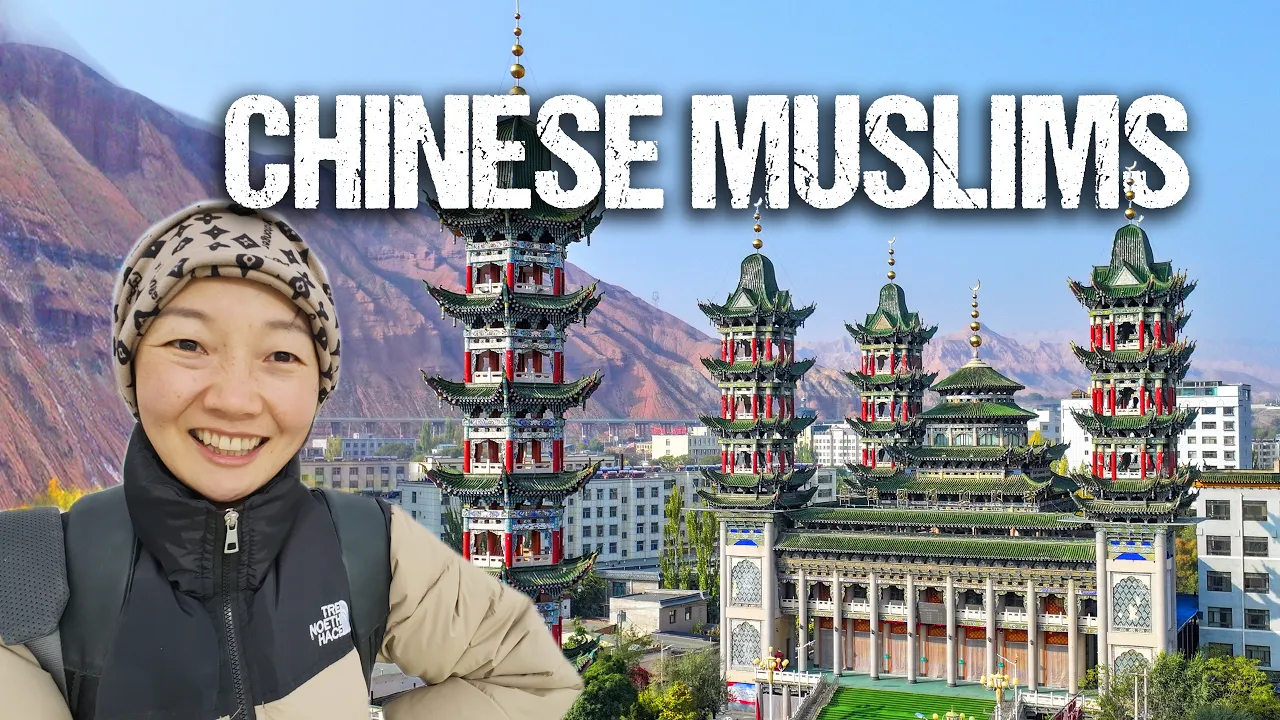
Xunhua is majority muslim (Hui and Salar people) and stands out through its beautiful traditional Chinese mosque landscape. Moreover, it holds one of only three ever written Qurans in one of its mosques.
Join me on this journey through Islamic China.
Little Chinese Everywhere takes us on a captivating journey through Xunhua County in Qinghai, China, a place where Islam and Buddhism intertwine. She first visits Jianzha, a predominantly Buddhist town with a significant Muslim population, before arriving in Xunhua, known as the "Mecca of China." Xunhua's unique blend of Chinese and Islamic cultures is evident in its stunning traditional mosques and the presence of one of only three handwritten Qurans in the country. This video offers a rare glimpse into the rich cultural tapestry of this region, showcasing the harmonious coexistence of different faiths and traditions.
I am at the melt point of religions and cultures within China, in Xunhua County, Qinghai. At first I reached Jianzha which is a majority buddhist town that also has some 30% muslim population as well. The next village however, I crossed to Xunhua county which is also called "The 'Mecca' of China".
Xunhua is majority muslim (Hui and Salar people) and stands out through its beautiful traditional Chinese mosque landscape. Moreover, it holds one of only three ever written Qurans in one of its mosques.
Join me on this journey through Islamic China.
This episode of "Where ISLAM meets BUDDHISM" follows Little Chinese Everywhere as she journeys through Xunhua County in Qinghai province, China—a region described as the "Mecca of China." The video showcases the unique blend of Islamic and Buddhist cultures, highlighting the area's rich history and stunning landscapes.
Little Chinese Everywhere begins her journey in Tongren, a Tibetan autonomous county, before arriving in Xunhua, home to the Salar people, an ethnic group believed to have originated from Samarkand (present-day Uzbekistan). She notes the striking juxtaposition of Buddhism and Islam, evident in the region's mixed population and cultural practices.
The journey takes her through breathtaking scenery, a transitional zone between the Qinghai-Tibetan plateau and the Loess plateau. The landscape is described as stunning, with colorful, red mountains. She also highlights the Yellow River's origin, observing its clear waters before they become muddy further downstream.
The video then focuses on Jianzha, a town with a significant Muslim population alongside its Buddhist majority. Little Chinese Everywhere points out the distinctive Chinese-style minarets of the mosques, which resemble pagodas, a testament to the unique architectural fusion. She visits the Zhihe Monastery, a spectacular structure nestled among colorful Danxia landforms, showcasing the erosion of mudstones and tiny meditation caves in the rock.
Continuing her journey, she arrives in Xunhua, immediately noticing the distinct Islamic elements, such as the white caps worn by many men and the numerous minarets in every village. She explores several mosques, emphasizing their unique architectural style, a blend of traditional Chinese aesthetics and Islamic features. She notes that the mosques often feature a combination of Islamic calligraphy and Chinese painting, each mosque uniquely combining Chinese and Islamic elements with creative freedom. The minarets, in particular, are highlighted as being strikingly different from those found in the Middle East, showcasing a traditional Chinese pagoda style.
Little Chinese Everywhere also interacts with locals, engaging in conversations to learn more about the Hui and Salar people, their origins, and their shared Islamic faith. She learns about the differences between the two groups, noting that Salar people have their own language, while Hui people speak Mandarin. She also visits the Ahetan Mosque, a 600-year-old structure, and learns about a handwritten Quran, believed to be one of the oldest in China. The video concludes with Little Chinese Everywhere expressing some regret at having to leave, mentioning several other sites she wished she had time to explore, further emphasizing the richness and diversity of the region.
Little Chinese Everywhere's latest vlog takes us to Xunhua County, Qinghai, a fascinating region where Islam and Buddhism intertwine. Explore stunning mosques with unique Chinese architectural styles, learn about the Hui and Salar ethnic groups, and discover the historical significance of the region along the ancient Silk Road. This journey unveils a blend of cultures and faiths, showcasing the rich tapestry of China's diverse heritage. A must-watch for anyone interested in cultural exploration and off-the-beaten-path adventures!
Little Chinese Everywhere explores the unique blend of Islam and Buddhism in Xunhua, Qinghai, China, experiencing stunning mosques and rich cultural immersion. A captivating journey!
Islamic China: Xunhua's Unique Mosques & Cultural Blend
2:10 Eastern Qinghai and Southern Gansu are home to some of the oldest and most vibrant Muslim communities in China, including the Hui, Salar, Dongxiang, and Baoan ethnic groups, who share the Islamic faith.
3:53 In Jianzha, towering pagoda-like structures, which are traditional Chinese-style minarets of mosques, are a common sight. This area is in the upper reaches of the Yellow River.
7:56 The regions of Hualong Hui autonomous county and Xunhua Salar autonomous county have a huge Islamic community and are a hub of Islamic culture in China, sometimes known as the Mecca of China.
8:22 In Xunhua, many men wear white caps, a common headwear for Muslim men, and every village has a minaret.
13:17 The number and diversity of mosques in Xunhua are astounding. Each village has at least one mosque, and their design reflects a fascinating blend of traditional Chinese aesthetics and Islamic features.
14:02 Each mosque in Xunhua is unique, as builders mix Chinese and Islamic elements with creative freedom. The entrance often features Chinese Shanshui paintings.
16:54 Near Xunhua, there are many other places to visit, such as the old residence of the 10th Panchen Lama, the Lajia ruins (where you can see noodles from 4000 years ago), and the Bingling Buddhist Grottoes (from more than 1600 years ago).
0:00 Ancient Mosque Architecture
0:48 Journey to Xunhua
2:10 Islamic Faith in China
3:53 Jianzha's Unique Mosques
7:41 Hualong & Xunhua Counties
8:22 Exploring Xunhua Mosques
9:01 Ahetan Mosque Visit
11:15 Hui & Salar Cultures
12:29 Ancient Handwritten Quran
13:17 Mosque Architecture Blend
16:42 Travel Reflections
0:00 Intro
1:57 Jianzha - Meltpoint of Islam and Buddhism
7:41 Xunhua - The "Mecca" of China
12:27 Handwritten Quran
What is Xunhua known for?
Xunhua is known as the "Mecca of China" because it has a large Muslim population and many beautiful mosques with a unique blend of Chinese and Islamic architecture.
What are the Hui and Salar people?
The Hui and Salar are ethnic groups in China who primarily follow Islam. The Salar people speak their own language, while the Hui people speak Mandarin. They have different origins, but both are believed to have Central Asian roots.
What's special about the mosques in Xunhua?
The mosques in Xunhua are incredibly unique because they blend traditional Chinese architectural styles with Islamic features. They often feature Chinese-style pagodas as minarets, Chinese paintings, and Islamic calligraphy.
What is the significance of the handwritten Quran in Xunhua?
The handwritten Quran in Xunhua is believed to be one of the oldest in China, brought by the ancestors of the Salar people when they migrated from Central Asia along the Silk Road.
What other places are near Xunhua?
Near Xunhua, you can find the old residence of the 10th Panchen Lama, the Lajia ruins (famous for 4000-year-old noodles), and the Bingling Buddhist Grottoes.