Travel Guides & Tips in this video
- Tip 1Be prepared for connectivity issues; have backup plans for live-streams and be flexible with timing. (0:15)
- Tip 2If you want seasonal experiences, October after national holidays is a good window in Yunnan, but adjust for weather. (4:20)
- Tip 3In Dali, balance commercialization with local culture; explore the old town and nearby areas for a broader sense of Bai life. (11:30)
- Tip 4Rainy-day activity alternative: Jama workshop is a great indoor option; you’ll still see authentic craft. (16:35)
- Tip 5Engage language helpers or guides; Destiny provides English PDFs and English-speaking assistants to ease communication. (24:50)
- Tip 6Consider buying handmade Jama pieces as gifts; they’re lightweight and come with a wax-sealed envelope option. (30:25)
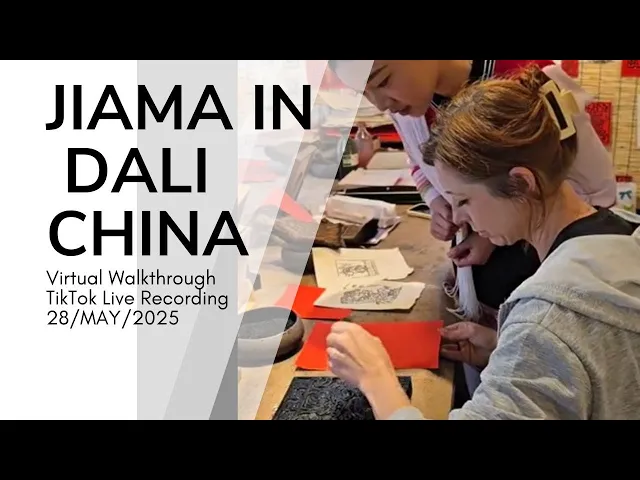
Jasminia Gough’s live journey through Dali Old Town in Yunnan becomes a vivid, rain-soaked immersion into the JiaMa (Jama) festival culture, Bai ethnic crafts, and the broader texture of southwest China. Although she wrestles with unstable Wi-Fi and a fussy gimbal, the broadcast evolves into a kinetic diary of discovery: a rainy morning that starts with tech hiccups, coffee runs, and a candid, humorous narration about the city’s rhythm and seasonality. The core thread centers on Jama, a centuries-old Bai tradition that blends textile dyeing (tie-dye), woodblock-style stamping, and paper crafts into a tactile festival experience, all performed with great warmth by Destiny and her team in a renovated temple-courtyard setup. Destiny, an apprentice of Jama, guides Jasminia and Everett through choosing blocks, mixing ink, pressing prints, and interpreting the auspicious meanings of each stamp. The activity is priced accessibly (about 49 RMB), and participants can select two large motifs, a
Next travel video: ( 30 / 32 )
More about the current video:( 29 / 32 )

Jasminia Gough travels through Dali Old Town in Yunnan, China, chasing the JiaMa (Jama) festival experience with Destiny, a Bai ethnic crafts guide. The stream begins with live-location vibes, weather-wobbly tech, and a frank diary format about a difficult morning—wet clothes, refund drama, and connectivity glitches—before pivoting to cultural immersion. Destiny introduces Jama, a centuries-old Bai art of paper, tie-dye, and woodblock stamping, as a rainy-day activity in a temple-side shop. The guest group includes Everett, who joins to try Dharama (print) and the tie-dye, while Destiny explains each symbol’s meaning (good fortune, prosperity, protection, marriage, study, and more). Participants choose two large blocks, or one large or multiple small blocks, print on handmade paper, stamp with motifs, and optionally wax-seal envelopes for keepsakes. Jasminia learns about the nuanced meanings behind each stamp (two big or several small), the difference between old vs. new Jama pieces, and the master–apprentice dynamic as Destiny demonstrates technique with a patient mentor. Throughout the broadcast, the group encounters a friendly kitten, tea tasting from Destiny’s mother’s tea factory, and a wave of gifts from generous viewers that fuels the day’s momentum. The Jamaica workshop is priced around 49 RMB, and Destiny’s team uses English PDF guides and a Red Note (Redbook) presence to help foreign visitors navigate. The scene shifts to tobacco-scented rain, lanterns, and the old-town aesthetics—tied together by Destiny’s bilingual storytelling that blends craft, history, and personal connection. By the end, Jasminia leaves with a finished Jama piece, a sense of the Bai minority culture, and a plan to share the experience on YouTube, while Destiny promotes follow-ups through Shiao Hong Shu/Red Note, and the team announces the local tea products and print sets as souvenirs. The video closes with gratitude to supporters and a reminder to savor slow, rainy-day cultural experiences in Dali.