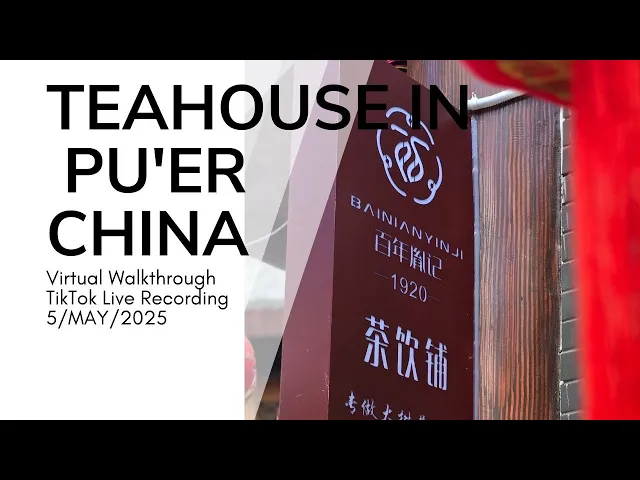
Step into the peaceful rhythm of daily life in a traditional teahouse nestled in the misty hills of Pu'er, Yunnan — the birthplace of the world-famous Pu'er tea. From the gentle clink of porcelain cups to the aroma of freshly steeped leaves, this short video captures the heart of tea culture in rural China.
Featuring: authentic tea brewing, quiet conversation, and the warm soul of Pu'er hospitality. Location: Pu'er, Yunnan, China.
Traveler Jasminia explores Pu’er’s teahouse scene on a quiet May Day, meeting a local tea shop owner and learning about Pu’er tea, ancient tea trees, and hands‑
Travel Guides & Tips in this video
Jasminia Gough takes viewers on an immersive, sun-washed stroll through Pu'er’s teahouse culture in Yunnan. The livestream blends personal travel chaos with curious tea pedagogy, as she chats with locals about Pu’er tea origins, old tea trees, and traditional brewing methods. The day starts with hotel-room juggling and a quiet May Day holiday atmosphere, then pivots to meeting a tea house owner who runs a modern-twisted tea shop near Tahorse Road. The owner demonstrates traditional “wake the tea” and kung fu-style brewing, complete with tea pets, giant tea cakes, dragon pearl leaves, and a cascaded tasting that moves from bitter to sweet. The conversation touches on logistics for traveling China (WeChat/Alipay setup, VPNs, cash vs. digital payments), the practicalities of nail “press-on” fashions, and the nuanced differences between sun-dried and roasted teas. Throughout, Jasminia reflects on the rhythm of rural life, the social glue of tea as a shared language, and the rich tapestry—c
Next travel video:
Pu'er Teahouse: Authentic Tea Culture in Rural Yunnan, China
🌿 A Glimpse Into a Teahouse in Pu'er, Yunnan | 云南普洱茶馆日常 🍵✨
Step into the peaceful rhythm of daily life in a traditional teahouse nestled in the misty hills of Pu'er, Yunnan — the birthplace of the world-famous Pu'er tea. From the gentle clink of porcelain cups to the aroma of freshly steeped...
Pu'er Tea House Tour & Ancient Tea Road Experience in Yunnan
Embark on a sensory journey to Pu'er, Yunnan, China, the legendary origin of Pu'er tea. This video invites you into a serene teahouse, showcasing the authentic tea brewing process and the tranquil ambiance of rural Chinese life. Experience the subtle beauty of daily rituals, from the delicate clinking of teacups to the rich aroma of steeped leaves. Discover the warm hospitality and the soul-stirring essence of this hidden gem in China's countryside. It's a peaceful escape into a world where tradition and tranquility intertwine.
Attractions in this video: Ancient Tea Horse Road, Pu'er Tea, Tea Farm, Purple Pottery
More about the current video:(Published on 2025-05-07)
Jasminia invites viewers into a peaceful Teahorse Road morning in Pu’er, Yunnan, as she threads together travel logistics with tea lore. She meets a young local tea-house owner who crafts a modern take on Pu’er tea, weaving in stories of ancient trees, sun-drying vs roasting, and the ritual of wake-the-tea. We see close-ups of dragon pearls, tea cakes, and delicate teawares, then listen to a bilingual conversation about the social fabric of rural China, tea’s place in daily life, and the interplay of tradition and modernity. The traveler narrates practical tips on payment apps (WeChat/Alipay), VPNs, and the importance of cash as a backup, while highlighting the sense of calm and community that tea fosters. Traveler Jasminia’s voice appears 1–2 times, framing the experience as a bridge between cultures and a lesson in patient, authentic travel.
The scene is rich with local color: elephants? no — but hundreds of years-old tea trees, sun-dried leaves, and a tea shop perched above a hillside path. A gentle breeze, lanterns clinking, and the soft hum of conversation ground the moment in rural Pu’er. The narrative ends with a promise to revisit the store online once their English Shopify store launches, inviting viewers to explore their teas—dragon pearls, voluminous cakes, and single-origin picks—across a carefully curated online platform.
The episode centers on: Pu’er’s origin of tea, ancient tea roads, the sensory journey of tasting and waking tea, practical travel tips in China, and a respectful look at traditional crafts (purple pottery, tea ware) that accompany tea culture. Jasminia’s curiosity about local life and the owner’s pride in his craft make this a tactile, intimate portrait of tea’s texture, history, and communal spirit. Traveler Jasminia highlights meeting locals, sampling a spring green tea, and the surprising depth of a rural teahouse that feels both timeless and refreshingly contemporary.
Overall mood: tranquil, observant, and warmly inquisitive, with moments of humor, practical travel guidance, and vivid description of tea’s alchemy from leaf to cup.
FAQs (From the traveler's perspective)
Q: Do you need a Chinese bank account to travel in China?
A: No. For most travelers, it’s easiest to use a local SIM with WeChat/Alipay, bring cash as backup, and set up VPNs. If you plan to stay long, you could explore local banking options, but for short trips a foreign bank card is often not necessary.