
Travel Guides & Tips in this video
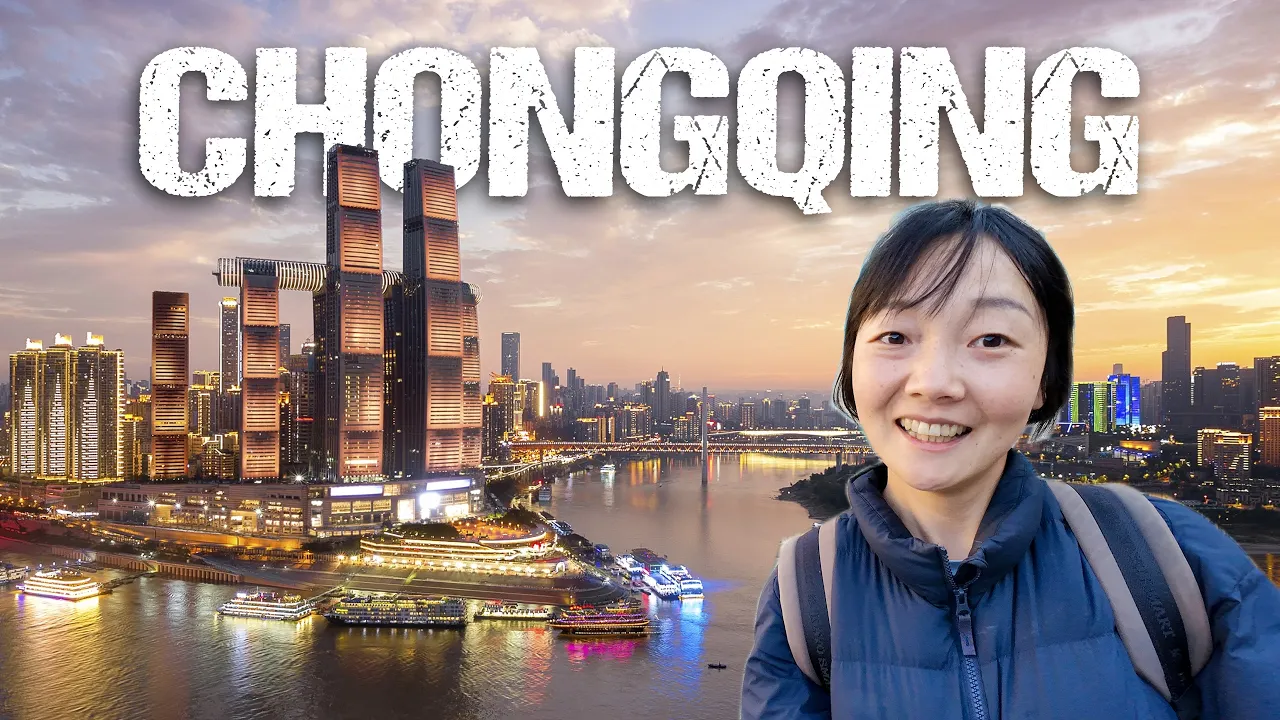
Little Chinese Everywhere's Chongqing day begins with a scooter ride through a complicated road network, then continues to Laojundong Temple on a mountain with views of the Yangtze River and city skyline. Fog is part of the city's winter weather. In the old town she walks through residences without elevators and meets a ninety-two-year-old woman who climbs twelve floors daily. Conversations with residents introduce local phrases and the Chongqing dialect. She samples wanzameon noodles and tofu rice, visits Kuixinglou, a former hospital with rooftop access, and speaks with motorbike taxi drivers about their work. The day closes with a nighttime view from Nanshan Park. Along the way she notes the city's hilly layout, street markets and variety of food beyond hot pot, while describing the warmth of local people.
Next travel video:

More about the current video:()

Temple and old town
Little Chinese Everywhere and her friend Flo start their Chongqing exploration on a scooter. The road network has many turns and signs, making it confusing even with navigation. They reach Laojundong Temple, a Taoist temple on a mountain range with views of the Yangtze River and the city. Chongqing's fog, especially in winter, adds to the setting.
The pair then walks through the old town, where older residences often have no elevators. One resident they meet is a ninety-two-year-old woman who still climbs twelve floors each day. Little Chinese Everywhere talks with locals, picks up a few phrases in the Chongqing dialect and learns about daily routines. She is struck by how residents manage the stairs and by their friendliness.
Street food and city views
The food stops include wanzameon, a spicy noodle dish, and tofu rice. Street markets sell fresh produce and other goods, and the host sees them as a way to experience local life. The route includes Kuixinglou, a former hospital that has become an attraction with rooftop access and city views. Little Chinese Everywhere also talks with motorbike taxi drivers about their daily work and the role motorcycles play in Chongqing's transport system.
The journey ends at Nanshan Park, where they look over the city at night. The video combines temples, residential buildings, markets, transport and food to show a city built across hills and cliffs. Chongqing hot pot is famous, but the host points out that there are other local dishes to try, including xiaomian noodles and tofu rice. Visitors driving or riding through the city may find its complex streets challenging, while walking through older neighborhoods involves stairs. These are practical details from the route as well as part of the experience she shares with viewers. The city's topography also affects how people travel between neighborhoods. Little Chinese Everywhere sees motorbike taxi drivers at work and talks with them about their routines. At night, Nanshan Park provides a broad view over the built-up hills, a change from the close-up streets and stairways in the old town.
FAQs (From the traveler's perspective)
- Q: How difficult is it to drive in Chongqing?
- A: It can be confusing because there are many signs, turns and layers to the road system. Even with navigation, Little Chinese Everywhere and Flo find it easy to lose their way on a scooter.
- Q: What's the most surprising thing you found in Chongqing?
- A: The ninety-two-year-old woman who still climbs twelve floors every day without an elevator surprised me. It gave me a vivid sense of how residents adapt to the older buildings.
- Q: What's the best food in Chongqing besides hot pot?
- A: Xiaomian noodles and tofu rice are really good; you can find them in Jiangbei and Banan districts.
- Q: What's the weather like in Chongqing?
- A: It is often foggy, especially in winter. The city’s nickname, Wu-du, means a city of fog.
- Q: What's it like to live in a building without an elevator?
- A: It means climbing stairs, especially when you live on a higher floor. Residents are accustomed to it, and the older buildings make stair climbing part of daily life in the neighborhoods we visited.
