
Travel Guides & Tips in this video
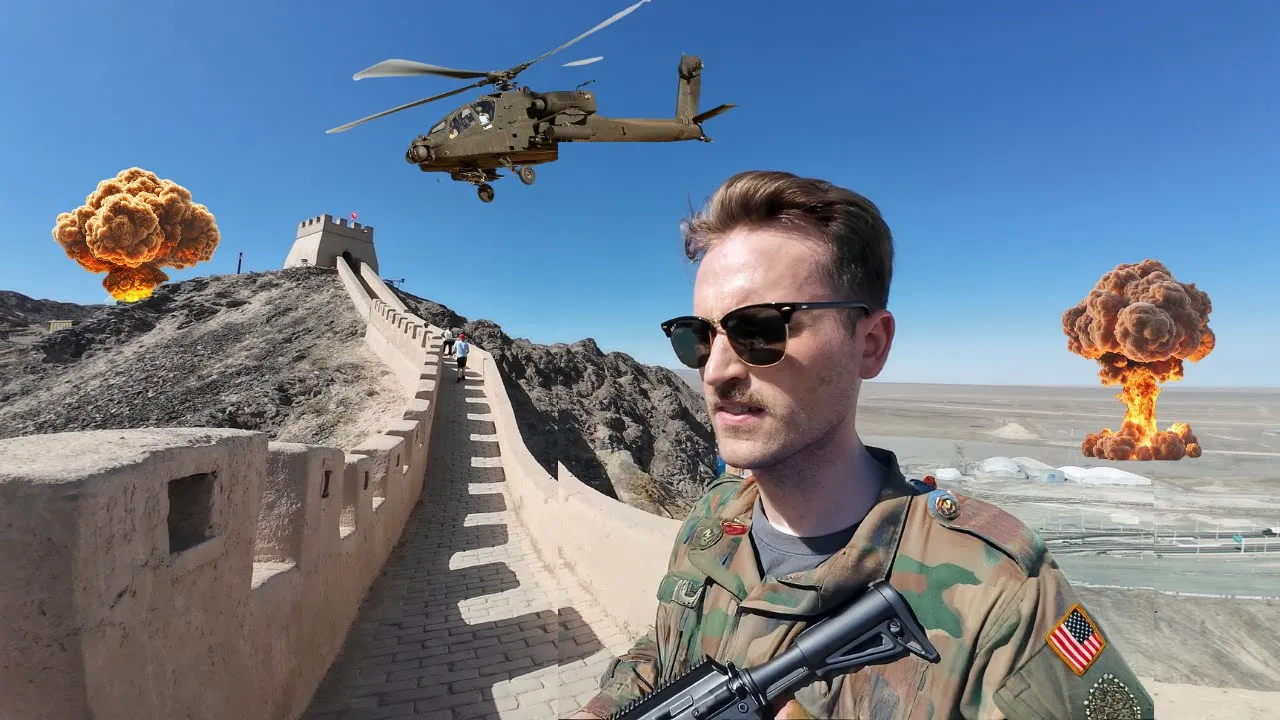
Small Brained American leaves Xinjiang and travels through Gansu toward the western end of the Great Wall. Along the way, he comments on public toilets, takes a train, sees noodles and wind turbines, and tries to navigate without a working SIM card. The connectivity problem complicates buying a watch and interacting in knockoff markets. He walks a less-visited western section of the Great Wall, climbs to a lookout, and reflects on the physical effort involved. The video also includes conversations with local people and observations about infrastructure and renewable-energy investment. The traveler’s tone is humorous and self-deprecating as he describes both inconveniences and discoveries on the route.
Next travel video:

More about the current video:(Published on 2025-04-19)

From Xinjiang into Gansu
Small Brained American begins by leaving Xinjiang and comments on the condition of public restrooms he encounters. Train travel is part of the route, and he shares practical observations about reclining the seat and the journey itself. In Gansu, the landscape changes to include wind farms and long stretches of road. The scenery and renewable-energy installations surprise him and become part of his reflections on China’s infrastructure. His progress is occasionally interrupted by communication problems: as a foreigner, he struggles to get a SIM card and learns that an official translation of his passport may be needed. Without mobile data, simple tasks become more difficult.
Markets and the western Great Wall
The SIM-card issue affects his attempt to buy a watch in a knockoff market, where language and payment create a challenge. He also interacts with local people, including moments of bargaining and conversation. The main destination is a less-visited western section of the Great Wall in Gansu. Small Brained American starts hiking, climbs toward a lookout, and then continues along the wall. The walk is physically demanding, but the views make the effort worthwhile for him. He notes that accessibility at historic sites can vary and the hike involves significant effort. His travel story focuses on both the wall and the practical problems along the way, including facilities, transport, connectivity, shopping, and the unexpected encounters that make the trip personal.
Gansu, connectivity, and local markets
The trip continues through Gansu, where the traveler sees wind farms and reflects on renewable-energy investment. He also rides a train and comments that reclining the seat is common practice. A SIM card becomes a source of frustration: as a foreigner, he finds that an official translation of his passport may be required, and without mobile data he has trouble using familiar services. That problem follows him to a knockoff market, where buying a watch becomes more difficult because communication and connectivity are limited. His conversations with local people and attempts to bargain add human details to the route. He also notes practical differences he encounters while moving between places, including public facilities and transportation.
Hiking the western Great Wall
The later part of the journey takes him to the western end of the Great Wall in Gansu. He hikes along the wall toward a lookout point and describes the physical effort of the route. The section is less visited than more familiar parts of the wall, which gives the visit a different setting. Along the way he sees the landscape and wind farms, and reflects on the scale of the historic structure. His video combines the hike with the earlier travel difficulties: the toilets he encountered, train travel, food, the SIM issue, and shopping without easy mobile access. The account stays personal and humorous, including both irritation at small obstacles and appreciation for the scenery and local conversations.
The route’s practical problems
The traveler’s trip is also shaped by things that do not go as planned. He leaves Xinjiang, notices the condition of public toilets, and rides a train before continuing through Gansu. He talks about seat reclining as a normal part of train travel and observes noodles and windmills along the way. Without a SIM card, he has difficulty using online services and communicating while shopping. His attempt to buy a watch in a knockoff market becomes one example of how a small technology problem affects a day of travel. He also comments on bargaining and on the need to be ready for physical activity at the Great Wall, where his route involves a sustained hike toward a lookout.
FAQs (From the traveler's perspective)
- Q: What section of the Great Wall does Small Brained American visit?
- A: He explores a western section of the Great Wall in Gansu, which the video presents as a less-visited part of the route. He hikes toward a lookout and continues along the wall.
- Q: What problem did he have with getting a SIM card?
- A: He found that getting a SIM card as a foreigner could be difficult and that an official translation of his passport might be required. Without mobile data, buying a watch and navigating markets became harder.
- Q: What did he notice in Gansu?
- A: He sees wind farms and reflects on renewable-energy investments and the infrastructure along the route. The video also includes noodles, train travel, local markets, and his hike on the Great Wall.
