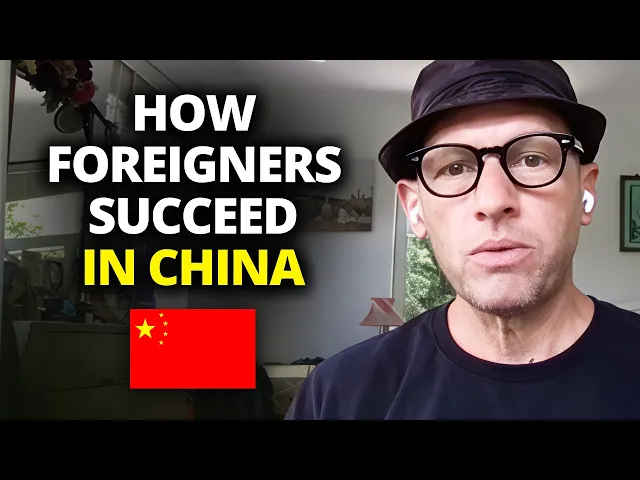
Meet Dominic Johnson-Hill, a Brit who has lived in China for over 35 years. He founded the renowned clothing brand Plastered 8, frequently appeared on Chinese TV, and even clashed with the government over his creativity. Dominic shared how Western media fuels myths about China, whether it’s really possible to protect your ideas and innovations there, and the one right way to solve problems in China. Enjoy!
About life in Beijing (in Chinese)
Chinese vs. Western Mindset
Misconceptions About China
Intellectual Property Rights in China
Censorship Pressure in China
What Happens When You Get in Trouble in China
How Not to Get in Trouble in China
Life in Beijing
What China Was Like in 1993
Learning Chinese with Locals
Have Chinese People Changed?
How China Changed This Brit
Is It Easy to Succeed in China if You’re a Foreigner?
A British expat shares his 35-year journey in China, discussing cultural nuances, navigating business and IP, and embracing life's adventures. He offers insights into the evolving Chinese mindset and the importance of understanding local perspectives.
Travel Guides & Tips in this video
Dominic Johnson-Hill, a Brit living in China for 35+ years, offers a candid look at life in Beijing. He discusses the pragmatic Chinese mindset shaped by history, contrasting it with Western individualism. Misconceptions about China are common, but Dominic stresses patience and curiosity. He shares insights on navigating intellectual property in China, his own creative risks with products like 'canned air,' and the importance of respecting local sensitivities. His advice for foreigners: embrace the culture, learn the language, and be open. For Dominic, life's meaning is adventure, which has fueled his entrepreneurial journey and deep connection to China.
Next travel video:
35 Years in China: Brit's Honest View on Culture & Innovation
Meet Dominic Johnson-Hill, a Brit who has lived in China for over 35 years. He founded the renowned clothing brand Plastered 8, frequently appeared on Chinese TV, and even clashed with the government over his creativity. Dominic shared how Western media fuels myths about China, whether it’s really...
35 Years in China: A Brit's Honest View on Beijing Life & Business
Max Chernov sits down with Dominic Johnson-Hill, a Brit who's called China home for over 35 years. Dominic, founder of the popular Plastered 8 brand and a familiar face on Chinese TV, offers a candid perspective on life in China. He challenges Western media narratives, discusses the realities of protecting intellectual property, and shares his experiences navigating the system. This conversation delves into cultural differences, personal growth, and the evolution of China through the eyes of a long-term expat.
Attractions in this video: Plastered 8, Hutong, Cctv Tower, Beijing Opera
More about the current video:(Published on 2025-09-04)
Dominic Johnson-Hill, a British expatriate who has resided in China for over 35 years, shares his unique perspective on life in Beijing, the evolution of Chinese society, and navigating cultural differences. He founded the successful clothing brand Plastered 8, drawing inspiration from Beijing's rich history and iconography, often incorporating retro designs that resonated with both locals and international audiences. Dominic highlights the pragmatic mindset of many Chinese people, shaped by a history of chaos, which prioritizes security and stability. This contrasts with a Western focus on individuality and creativity, though he notes a growing emergence of individual expression in China.
Misconceptions about China are prevalent in the West, often fueled by media narratives. Dominic recounts humorous anecdotes, like a hairdresser asking if England has flies, to illustrate the vast differences in global awareness. He emphasizes the importance of patience and curiosity when interacting with Chinese people, who are generally very curious about the outside world. A significant discussion point is intellectual property (IP) in China. While acknowledging the historical challenges, Dominic explains that IP protection is evolving, and with the right legal approach, creators can safeguard their work and even profit from licensing and litigation. He shares his experience trademarking old Chinese iconography, turning forgotten designs into valuable assets.
Dominic also touches upon his experiences with creative expression and the occasional run-ins with authorities. He recounts creating satirical products like canned Beijing air and pollution globes, which, while generating buzz, led to confiscations and a stern warning. He learned to navigate these sensitivities, emphasizing the importance of understanding the political climate and avoiding overtly political commentary. His advice for foreigners in China is to embrace the culture, learn the language, be respectful, and approach interactions with an open mind. He stresses that genuine connection often comes from shared meals and open conversations, fostering understanding and problem-solving.
Reflecting on Beijing's transformation from the 1990s to the present, Dominic notes the physical changes, such as the population boom and the rise of high-rises, alongside a shift in societal dynamics. He observes that while people have physically changed and gained access to more products, a certain 'smell' of personality or uniqueness might have diminished for some, replaced by increased competitiveness. Ultimately, Dominic defines the meaning of life as adventure, a force that has driven his entrepreneurial spirit, his artistic endeavors, and his deep connection to China, a country that has profoundly shaped his personality and provided a life beyond his wildest imagination.
FAQs (From the traveler's perspective)
Q: What was Beijing like in the 90s compared to now?
A: Physically, it's transformed with a massive population increase and high-rises. Back then, it was flatter, darker at night, and foreigners had special currency and areas. Life felt simpler, though less private.
Q: How is the Chinese mindset different from the Western mindset?
A: China's mindset is pragmatic, prioritizing security and stability due to a chaotic history. Western mindsets often focus more on individuality and creativity, though this is changing in China.
Q: Is it true that there's no IP protection in China?
A: While IP protection has evolved, it's possible to protect your work. You can license your IP and even profit from litigation if needed, but you must be proactive.
Q: What advice do you have for foreigners wanting to do business in China?
A: Be patient, curious, and respectful. Learn the language and culture, embrace local customs like shared meals for problem-solving, and approach opportunities with an open mind.
Q: Have you ever gotten into trouble for your creative work in China?
A: Yes, I once created satirical products like 'canned Beijing air' and 'pollution globes.' They went viral but were confiscated. It taught me to be mindful of sensitive topics and political shifts.
Q: How did you learn to speak Chinese?
A: I learned through immersion and practice, finding it easier than classroom learning. Grammatically, it's quite simple, and copying native speakers helped me learn quickly.
Q: What is the meaning of life for you?
A: It's adventure. True adventure involves facing fears and stepping out of your comfort zone. It's what has led to my greatest successes and happiness in life.