Max Chernov's video delves into the multifaceted experience of living in China as a Black American, featuring insights from Josh, who has resided there for seven years. Josh candidly shares his initial encounters with racial curiosity, where he was sometimes denied entry into clubs or bars, and how people would stare intently. He notes that while these instances were more prevalent in the past, they have lessened, especially in larger cities like Beijing and Shanghai. He emphasizes the need for patience, self-discipline, and self-awareness when navigating these cultural differences, explaining that the staring is often out of curiosity rather than malice.
Josh also addresses common misconceptions Americans hold about China, particularly the idea that it's a poor, backward country with limited opportunities. He counters this by highlighting the entrepreneurial spirit he's witnessed among young Chinese people and the significant opportunities available. He discusses the 'China Dream,' which he sees as the nation's aspiration for global strength and influence, alongside the personal dream of affording a comfortable lifestyle, noting the challenges posed by high housing costs in major cities.
Touching upon China's political system, Josh explains that while it is communist, with the Communist Party holding leadership positions, this structure has facilitated immense economic development and poverty reduction over the past four decades. He contrasts this long-term planning approach with the shorter election cycles in democracies, suggesting China is better positioned to address issues like global warming.
Shenzhen, where Josh has spent most of his time, is described as a modern, rapidly developing city with a strong focus on electric vehicles, evidenced by its all-electric taxi and bus fleets. However, he misses the cold weather, finding Shenzhen's heat and humidity challenging. The conversation also touches on internet access, noting that while many Western sites are blocked, VPNs can be used, and it becomes easier with a local SIM card. Josh expresses a strong sense of safety in China, contrasting it with his experiences in Southside Chicago. He attributes this to extensive public surveillance, which, while potentially intrusive, deters crime and creates a secure environment. He shares anecdotes of leaving belongings unattended in cafes without fear of theft, a stark difference from his perception of American cities.
Regarding business, Josh explains that despite geopolitical tensions, China remains essential for manufacturing at scale. He points to special economic zones established in 1978, like Shenzhen, as key drivers of China's manufacturing prowess. The video also explores the bustling electronics markets, where both genuine and counterfeit goods are readily available, showcasing the vastness of China's supply chain. Josh reflects on his return to the US, finding it more chaotic and divided than China, likening it to the 'Wild West' due to issues like homelessness, socioeconomic disparities, and gun violence. He contrasts the perceived lack of focus on basic needs like income and housing in the US with China's drive towards national strength and economic development. The video concludes with a look at Shenzhen apartments, the city's youthful demographic driven by economic ambition, and the distinct characteristics of Beijing versus Shenzhen, with Beijing being the political center and Shenzhen the hub for business and entrepreneurship.
FAQs (From the traveler's perspective)
- Q: What was it like being Black in China initially?
- A: Initially, there were moments where I wasn't allowed into clubs or bars because of how I looked. People would stare intently, which was shocking at first.
- Q: What are the biggest misconceptions Americans have about China?
- A: Many Americans think China is poor and backward with limited opportunities. I've found the opposite to be true, with significant opportunities for young entrepreneurs.
- Q: How is the 'China Dream' similar to the American Dream?
- A: The China Dream is about China as a nation becoming a strong global presence. Personally, it's about affording a good lifestyle, though housing costs in cities like Shenzhen are very high.
- Q: Is it true that China is communist?
- A: Yes, the government is organized under the Communist Party, which has driven economic development and lifted many out of poverty. However, it's not about people just obeying orders; it's about national advancement.
- Q: What's the biggest complaint about Shenzhen?
- A: The heat and humidity, along with cockroaches and mosquitoes. I miss the cold weather.
- Q: How is internet access in China?
- A: If you have an American phone number, internet access is generally easy. Once you get a Chinese number, the firewall becomes more apparent, but VPNs are common.
- Q: Do you feel safe living in China?
- A: Extremely safe. Compared to growing up in Southside Chicago, I don't worry about violence or personal safety here. The extensive surveillance contributes to this.
- Q: Why are Americans afraid to work with China?
- A: There's a geopolitical narrative against China, but businesses know manufacturing at scale is impossible without China. The challenges are more about cost, ecosystem navigation, and communication.
- Q: What's the biggest electronics market like?
- A: It's massive, with multiple buildings selling everything from components to finished goods, including both genuine and counterfeit products.
- Q: How does the US compare to China after living there for years?
- A: America feels divided and chaotic, like the 'Wild West,' with issues like homelessness and socioeconomic gaps. China, despite its system, feels more stable and focused on progress.
- Q: What are apartments like in Shenzhen?
- A: They are compact but comfortable, making good use of space. My shared living room and two-bedroom apartment costs about $1,000 USD per month.
- Q: How is Beijing different from Shenzhen?
- A: Beijing is the political center, with a palpable sense of government power and tighter controls during events. Shenzhen is more of a business-driven, younger immigrant city focused on entrepreneurship.
- Q: What is the 'fake old city' like?
- A: It's a relatively new construction, perhaps only 20 years old, designed to look old. While some original buildings from the 1400s might be within, the facade is refurbished.
- Q: How do you pay for things in China?
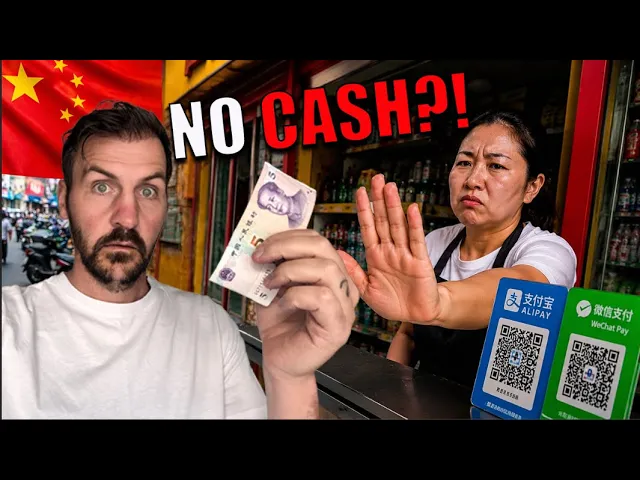
- A: Most places, even small ones and beggars, use QR codes for payment. It's very convenient and widely adopted.