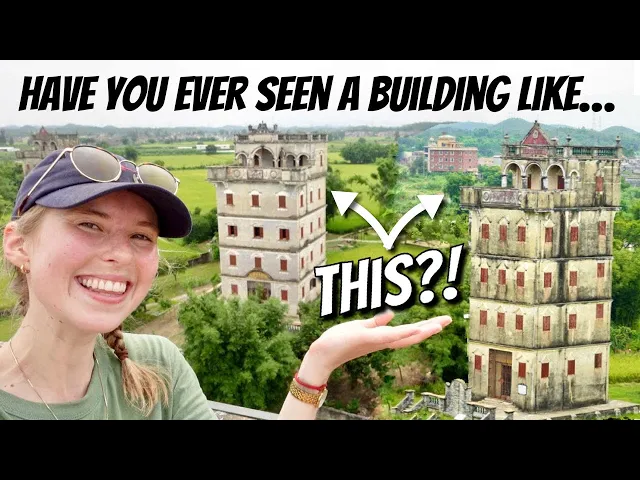
I've been wanting to visit the Kaiping Diaolou for so many years and was so excited to finally get the opportunity! These structures feature a fascinating blend of Western and Chinese design, and the reason why will surprise you...
Blondie In China explores Kaiping Diaolou, unique fortified homes blending Chinese and Western styles. A journey through history, revealing cultural fusion and personal stories. A truly captivating experience!
Travel Guides & Tips in this video
Explore the unique Kaiping Diaolou with Blondie In China! This video unveils the fascinating blend of Western and Chinese architecture in these structures, revealing a surprising history of overseas Chinese immigration. Journey through time as Blondie explores these fortified homes, sharing personal insights and local interactions. Discover the stories behind the Diaolou's design, their role in protecting families, and the cultural fusion they represent. Don't miss this captivating exploration of a UNESCO World Heritage site!
Next travel video:
Kaiping Diaolou: Western & Chinese Architecture in Guangdong
Blondie explores Kaiping Diaolou's unique blend of Western & Chinese architecture, a surprising cultural journey in China.
Explore the unique architectural marvel of Kaiping Diaolou, a testament to overseas Chinese culture. Discover the fascinating blend of Western and Chinese design in these incredible structures. Blondie in China's journey unveils the surprising history behind this architectural wonder, a must-see for any traveler interested in China's rich cultural heritage.
Attractions in this video: Kaiping Diaolou, Lyon Garden
More about the current video:(Published on 2021-07-13)
This video documents Blondie In China's journey to Kaiping, Guangdong, to explore the Kaiping Diaolou, a UNESCO World Heritage site. The Diaolou are unique structures that blend Western and Chinese architectural styles, a reflection of the region's history of mass overseas emigration during the 18th and 19th centuries.
Blondie's exploration begins with her initial awe at the Diaolou's striking appearance, a mix of columns, domes, and European-style trim. She delves into the history, explaining how overseas Chinese immigrants, having earned their fortunes abroad, returned to build these impressive homes, incorporating both Chinese and Western architectural elements.
The video showcases the Diaolou's defensive features, highlighting their function as protective family homes. Blondie explores both the exterior and interior of a Diaolou, noting details like grandfather clocks and protective mechanisms. She visits the Lyon Garden, a stunning example of architectural fusion built by a wealthy immigrant who spent ten years in the United States, incorporating modern Western elements like bathtubs and chimneys.
The journey also touches on the hardships faced by many emigrants. Blondie describes the perilous boat journeys, with mortality rates as high as 70 percent, and the grueling conditions faced by Chinese laborers building the transcontinental railroad in the United States.
Blondie's experience is not just about the Diaolou themselves; it's about the people and stories connected to them. She highlights a family temple funded and renovated by someone in Sydney, demonstrating the enduring legacy of overseas Chinese contributions. The video also includes a humorous moment where Blondie and her companions encounter what they believe to be a haunted Diaolou, adding a lighthearted touch to the exploration. Ultimately, Blondie's visit to Kaiping is a testament to the resilience and cultural impact of the overseas Chinese diaspora, a story told through the unique architecture and personal experiences she shares.
FAQs (From the traveler's perspective)
Q: What is the most striking feature of the Kaiping Diaolou?
A: The mix of Western and Chinese architectural styles is really something else. It's a fascinating blend that you don't see anywhere else.
Q: What's the story behind the Diaolou's design?
A: They were built by overseas Chinese who returned home with their wealth and incorporated both Chinese and Western architectural ideas into their designs.
Q: What was the most surprising thing you found in the Lyon Garden?
A: Probably the fact that it felt like I was in Europe and China at the same time! The mix of styles is incredible.
Q: What were the conditions like for Chinese immigrants traveling overseas?
A: Really dangerous. The death rate on those boats was shockingly high, sometimes up to 70 percent.
Q: Did everyone who left to find work overseas get rich?
A: Definitely not! Going overseas was a huge risk, and many people never made it back home.