
Travel Guides & Tips in this video
Two Mad Explorers descend into Dashiwei Tiankeng in Leye County, Guangxi, and explore its underground caverns. A guide explains the cave’s geological features and the history of a former gunpowder workshop. The travelers rappel down cliffs, move through narrow tunnels and cross challenging paths while seeing stalactites, stalagmites and underground plant life. They also visit a tunnel connecting sinkholes and finish the day with a barbecue.
Next travel video:

More about the current video:(Published on 2025-04-03)

Descending into Dashiwei Tiankeng
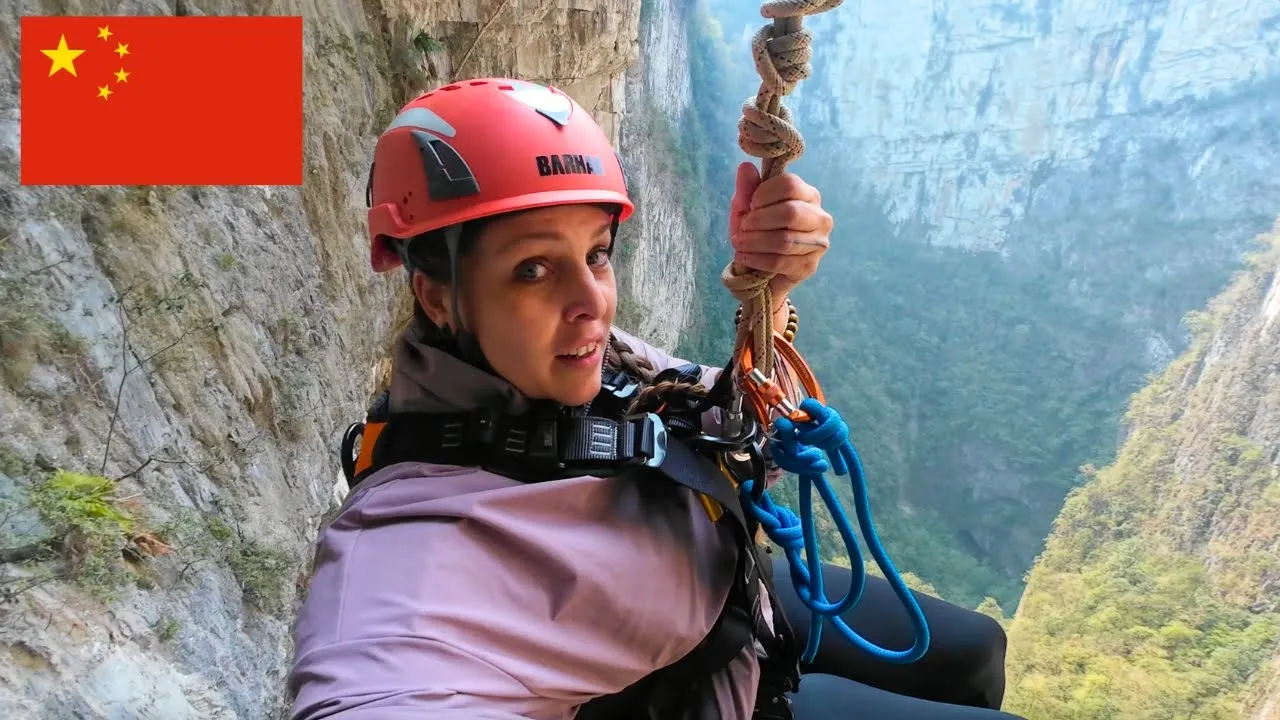
Two Mad Explorers visit Dashiwei Tiankeng in Leye County, Guangxi. They begin with a rappel down into the sinkhole, where the scale of the cavern and its ancient formations become clear. A guide explains the geology and points out the history of a former gunpowder workshop inside the cave system. The travelers learn about the difficult conditions faced by the people who built and used the workshop, and they move through narrow tunnels and along challenging paths.
The cave contains stalactites and stalagmites as well as plant life adapted to the underground environment. The travelers react to the enclosed spaces and the height of the rope descents, describing both fear and awe. One tunnel connects two sinkholes, giving them a route through the larger cave system. Weather and seasonal conditions matter because rockfalls can pose a hazard, and some paths may be difficult for visitors with limited mobility.
Views, safety and the day’s end
As they explore, the travelers pause for views of the sinkhole’s interior and take photographs of the lighting and formations. They rely on guides and safety equipment rather than exploring alone. The descent and ascent require ropes and careful movement on narrow routes. After coming back up, they celebrate with a Guangxi barbecue. The day combines the cave’s history and geology with a demanding outdoor activity and a shared meal.
The guide explains how the former gunpowder workshop was used and what it took to work in the cave. The route goes through small tunnels and over uneven paths, and at points the travelers are suspended on ropes above the floor of the sinkhole. Their reactions make the height and exposure clear: they are afraid to look down, then focus on the cave around them. They see stalactites and stalagmites, as well as plant life growing in the underground environment. The tunnel joining two sinkholes is another important part of the route, helping them understand how the cave system connects.
For visitors, the day depends on preparation and local guidance. Cave temperatures are colder than outside, sunlight changes the appearance of the formations, and the weather can affect rockfall risk. Narrow tunnels and paths may challenge people with limited mobility. The travelers use guides and rope equipment and do not explore alone. After the descent and ascent, the barbecue gives them a chance to relax and talk through the day.
FAQs (From the traveler's perspective)
- Q: How did it feel to rappel into the sinkhole?
- A: The descent felt frightening at first, but after getting inside the fear gave way to awe at the size of the underground space.
- Q: What was the most interesting thing they learned about the cave?
- A: The cave once housed a gunpowder workshop. The travelers learn about its history from their guide and hear about how people worked in the difficult underground conditions.
- Q: What was the hardest part of the experience?
- A: The most difficult moments were the rope descents, when the explorers were suspended high above the ground and felt afraid to look down.
