
Travel Guides & Tips in this video
Two Mad Explorers travel to Basum Tso Lake, one of Tibet’s sacred lakes, and learn about its importance in Buddhist and Bon traditions. They walk a kora around the lake, see prayer flags and a Buddhist pillar, and discuss the idea of hidden lands. Their visit also includes a temple, an old stupa building and a water offering. At a local Tibetan restaurant, they try yak meat and wheat noodles, while observing residents chatting and playing cards. The trip combines lake scenery with local spiritual practices and food.
Next travel video:

More about the current video:()

Basum Tso and spiritual traditions
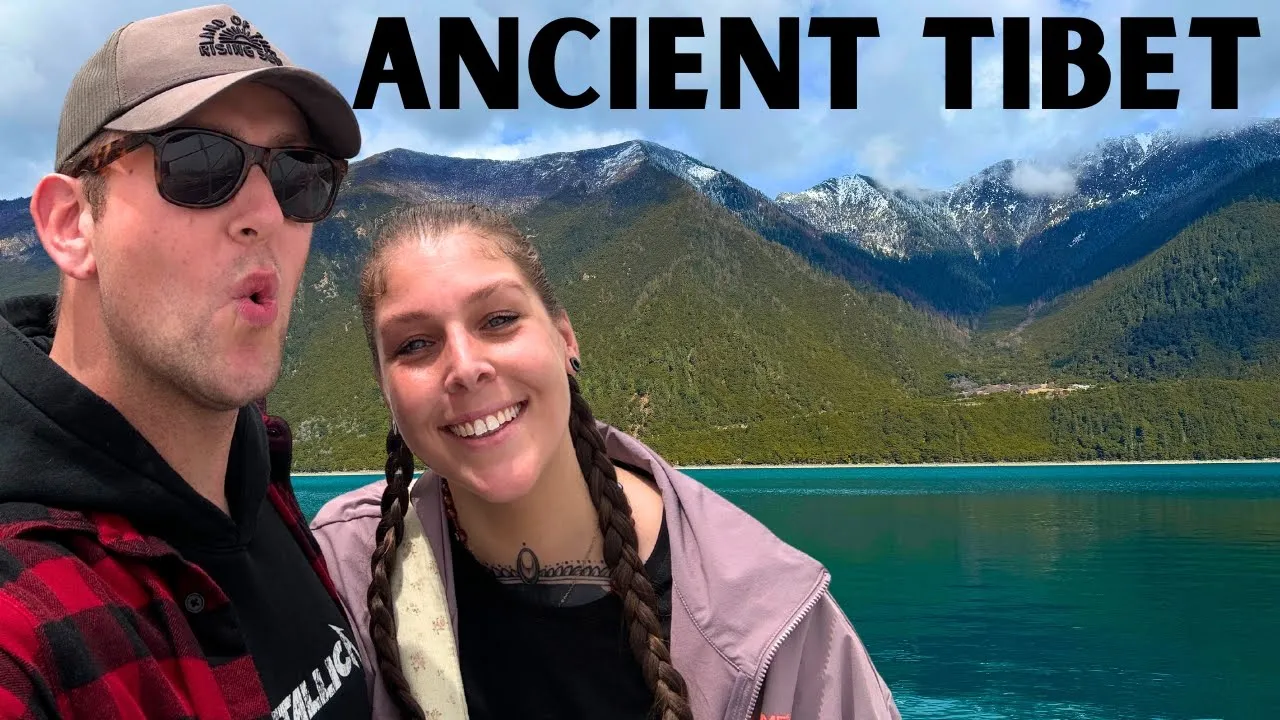
Two Mad Explorers visit Basum Tso Lake, one of the sacred lakes in Tibet. They discuss its significance to both Buddhist and Bon traditions and the beliefs attached to its formation. The lake’s blue water and surrounding snow-capped mountains form the setting for a walk called kora, or circumambulation. Along the way, the travelers see prayer flags, a Buddhist pillar and places where people make offerings.
They also talk about beyul, or hidden lands, and see a temple and an older stupa building. The source describes the old stupa as built without cement in rounded shapes, unlike modern versions. The travelers make a water offering and discuss its spiritual meaning. Some traditions hold that offerings accumulate positive karma and help with a transition after death; these are beliefs described in the visit, not guaranteed outcomes.
A meal at a local Tibetan restaurant
The trip includes a meal at a local Tibetan restaurant. Two Mad Explorers enjoy yak meat and wheat noodles, emphasizing the flavor and quality of the food. The restaurant has a homey atmosphere, with local people chatting and playing cards nearby. Their interactions with diners and the meal add a social dimension to the visit.
The travelers also mention a tradition of offering food or money to support monks devoted to study and prayer. They connect generosity with spiritual values and Buddhist ideas about how actions in this life affect future lives. These descriptions are presented as cultural beliefs and practices encountered during the trip.
Visiting the lake and nearby sites
Basum Tso is a place for both scenery and spiritual observance. The travelers walk around the lake, see prayer flags and visit nearby religious structures. Their meal in a Tibetan restaurant provides a different kind of local encounter, through food and conversations in a shared space.
For visitors, the source suggests that some people meditate or make offerings at holy sites as part of their practice. Travelers can observe respectfully and learn about the meanings shared by local people. The video’s account combines landscape, Buddhist and Bon traditions, the old stupa and Tibetan cuisine. Two Mad Explorers leave with a strong impression of the lake’s importance and of the warmth of the people they meet.
FAQs (From the traveler's perspective)
- Q: What is the spiritual significance of Basum Tso Lake?
- A: It is one of Tibet’s sacred lakes and is important to both Buddhist and Bon traditions. Some people believe that meditating there brings blessings and good karma.
- Q: What is special about food in Tibet?
- A: The travelers praised the quality of the food, especially the flavorful, tender yak meat and the wheat noodles.
- Q: What is the atmosphere like at the local Tibetan restaurant?
- A: It felt homey to the travelers. Local people were playing cards and chatting nearby, making the room feel like someone’s living room.
- Q: What is the tradition of offering water in Buddhism?
- A: The travelers describe a belief that offering water can support the soul during the 49 days between death and rebirth.
- Q: How are the old stupas built?
- A: The old stupa they discuss was built without cement in a rounded shape, unlike modern ones. The travelers found it distinctive.
