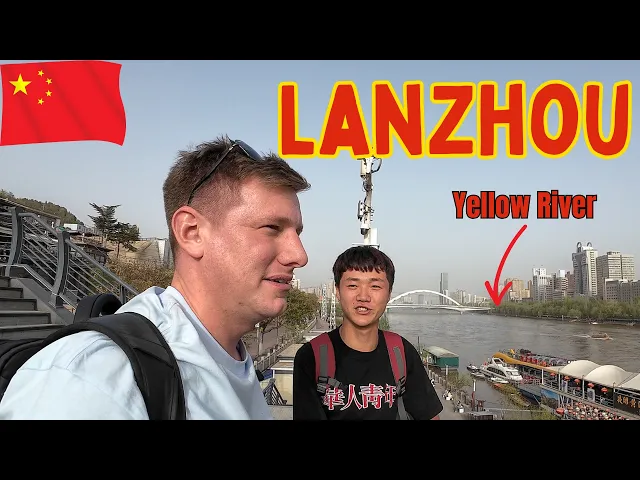
Travel Guides & Tips in this video
Editor’s note: Wilko Wanders takes us to the otherworldly Chaka Salt Lake on the Qinghai Tibetan Plateau, a place Yong can only describe as a mirror of the world. The video opens with a sweeping horizon of snow‑capped mountains reflected in a vast salt lake, instantly setting a sense of otherness along the Silk Road. Wilko explains the lake’s origin, how rising Tibetan Plateau terrain cut it off from the Yellow River, and how mineral salt has turned this into a saline wonderland studded with bird life and a serene, almost desert‑like ambiance. He tours on a peninsula that reaches out into the water, offering dramatic angles of the lake’s glassy surface and the surrounding range. He points out a small Buddhist temple perched among the mountains, rock cairns by visitors, and the wind’s harsh bite at high altitude, which reaches around 3,000 to 3,300 meters above sea level. The experience includes trying red saltwater boots to walk on the lake, a reminder of buoyancy and the need for care
More about the current video:(Published on 2025-09-01)
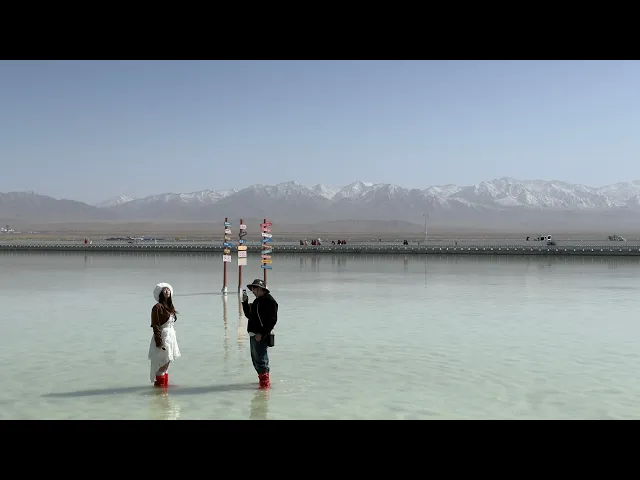
Wilko begins by describing Chaka Salt Lake, a saltwater expanse on the Tibetan Plateau that looks like the sea thanks to surrounding snow‑capped mountains. He explains the lake’s history and how the Tibetan Plateau’s rise trapped water here, creating a shimmering, mirror‑like surface. He notes the high altitude and strong wind, about 3,300 meters above sea level, and the need for warm clothing. A Buddhist temple sits on a rocky peninsula, and visitors leave cairns along the shore. The experience includes donning red salt boots to wade into the lake and test the buoyancy as salt crystals crunch underfoot. Wilko points out salt caves and mining history dating back over 3,000 years, along with platform trails and snowflake‑shaped viewing decks. He sees the lake as part of a larger Silk Road route, with nearby attractions like other salt lakes and the famous Kungam Snow Mountain. He reflects on the beauty and isolation of the region, the ongoing infrastructure development for tourism, and the value of overnight stays to fully experience the site. The video closes with thanks to Silk Road Travel and Leslie, and a call for viewers to share destinations they’d like him to explore next on the Silk Road.