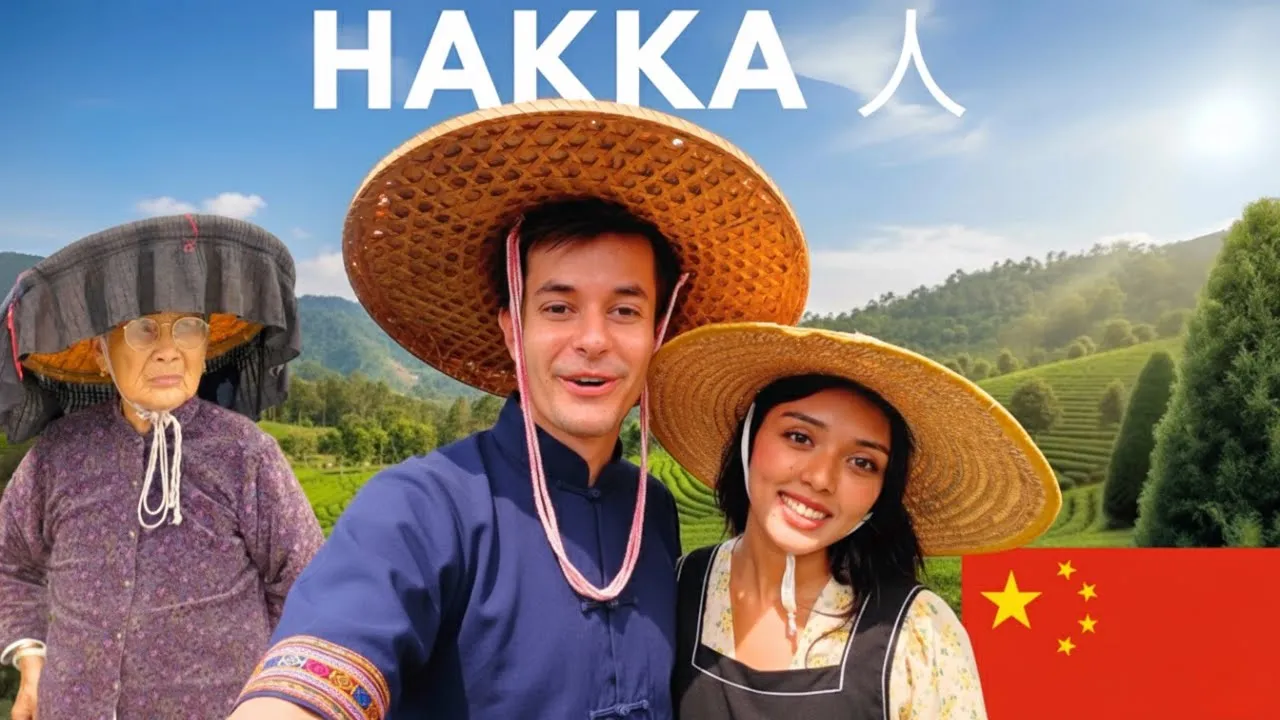
Travel Guides & Tips in this video
Jack and Sophia Torr travel through Meizhou's countryside to explore Hakka culture and tea production. They visit a thousand-year-old temple, learn about the symbolism of a life-and-death tree, and notice Ming and Qing inscriptions and artifacts. At the temple, they observe an unusual anticlockwise route around the main hall. Their tea stops follow the process from picking leaves and sun-drying them to conveyor-belt heating and tumble drying. They learn that tea plants are pruned so the leaves stay young and sweet. In Taigi Guen village, they see Hakka houses from the Ming and Qing dynasties, both original and restored. A farmhouse visit brings tea and a communal mug-washing practice. The trip also includes rural scenery, a garden-like landscape, a pond with fish and turtles, and Yaningua, a water-protection area where swimming may be restricted. They also see the tea garden and factory, where leaves move from picking through several drying and heating stages, and learn how pruning helps keep the leaves young. A farmhouse visit shows how tea is offered to guests, while old Hakka homes connect the countryside to its earlier generations. At Yaningua, water protection signs show why some swimming is restricted; another stop features a pool repurposed for koi.
More about the current video:(Published on 2025-09-30)

Hakka temples and village history
Jack and Sophia Torr explore the countryside around Meizhou to learn about Hakka heritage. At a thousand-year-old temple, they see prayer flags tied to trees and learn about the life-and-death tree, whose symbolism joins mortality with lasting love. They notice a practice of walking anticlockwise around the main hall, which differs from the direction they expected; the reason is not established without a local explanation. Inscriptions and artifacts from the Ming and Qing dynasties include messages associated with protection and well-being for the community. The route continues to Taigi Guen village, where the couple sees Hakka houses from those dynasties. Some houses retain their original character, while restored homes preserve details that help visitors imagine how earlier generations lived.
Tea growing and countryside customs
The tea portion of the visit follows leaves from field to cup. Tea plants are pruned to keep the leaves from growing too large and to preserve their sweetness and quality. Freshly picked leaves are laid out to dry in the sun, then processed with heat on a conveyor belt and further dried in tumbling machines. Jack and Sophia also experience tea picking and visit a farmhouse, where hosts offer them tea. Before drinking, the mugs are washed in hot water as a communal practice. They learn that flowers in the countryside may be edible, but tasting an unfamiliar plant requires confirmation. The video includes a pond where fish food can be purchased through an honesty system and an area marked for water-source protection, where swimming may be restricted. Rural scenery, tea production and local hospitality all form part of their visit.
The journey starts along a river in a picturesque rural setting, then leads to the temple's architecture and its connection with local Hakka people. Their observations include prayer flags and the symbolic tree, followed by inscriptions associated with two historical dynasties. The unusual anticlockwise walk around the main hall stands out because the couple do not know its reason. In the tea factory, the processing has several stages rather than a single drying step: leaves dry in open air, are heated as they travel along a conveyor belt, and tumble in drying equipment. The couple also see tea picking and learn why plants are pruned. Village visits show both old and restored houses, allowing them to compare the feel of original structures with renovations that keep historical character. At the farmhouse, tea is shared after mugs are washed with hot water. The route also includes a garden-like landscape, a former pool used for koi and a water protection area where swimming may not be allowed. These stops show how traditions, tea work and local landscape fit together in the countryside.
FAQs (From the traveler's perspective)
- Q: What does the life-and-death tree symbolize?
- A: It represents two ideas at once: mortality and enduring love. Jack and Sophia learn about this symbolism during their visit to the ancient Hakka temple.
- Q: Why do visitors walk anticlockwise around the temple's main hall?
- A: The route in the video is anticlockwise, which differs from the clockwise direction the travelers expected. They do not establish the reason, so a local explanation would be needed.
- Q: How is green tea processed?
- A: The sequence shown includes picking fresh leaves, air-drying, heating on a conveyor belt and further drying in tumbling machines before the tea is ready.
- Q: Why are tea plants pruned?
- A: The plants are pruned so they do not grow too large and the leaves stay young and sweet, supporting the quality of the tea.
- Q: What is unusual about the old pool in the nature reserve?
- A: The old swimming pool has been repurposed for large koi fish, making it an unusual feature of the reserve visit.
- Q: How does the video describe funding for infrastructure?
- A: It describes government ownership of land and resources and says revenue from mining and other ventures is reinvested in communities. This is the explanation presented in the video.
- Q: What are the restored Hakka houses like?
- A: The restored houses retain a historical feel and character, giving visitors a glimpse of how earlier generations lived in the village.
- Q: What happens when guests drink tea at a farmhouse?
- A: The hosts welcome Jack and Sophia with tea and wash mugs in hot water before serving. The video presents this as a communal and hospitable practice.