Travel Guides & Tips in this video
Amy and Peter spend a day in Guangzhou looking for Cantonese recipes that take time and skill to prepare. They try cotton chicken, a fried taro dumpling, a duck-foot bundle, a stuffed bao and Shui Ling Jiao rice noodles. At the restaurants shown, diners order from menus rather than trolleys. One shop is too busy to make the rice noodles, while another says the wait could be up to an hour. Their final meal is at China Hotel, where a project with Guangzhou Museum brings dishes back from older Cantonese menus and recipes. The video closes with reflections on the craft and labor behind the dishes.
Next travel video:
More about the current video:()
Disappearing Cantonese dishes in Guangzhou
Amy and Peter visit yum cha restaurants to try dishes that can be labor-intensive to prepare. Peter says some recipes are becoming harder to find because they take time and skill, bring restaurants limited profit, and may use ingredients that are harder to get. He also says fewer young people are willing to learn the techniques.
At one restaurant, they order cotton chicken. Amy describes its texture as unusually soft and airy, and points out mushrooms and fish maw with the chicken. They then head to another spot in Yuexiu.
At another restaurant, they try zha yu jiao, a fried taro dumpling with a hollow, delicate outside that the host says takes considerable skill to make. They also try ya jiao zha, a bundle made with deboned duck foot, taro, mushroom and pork skin tied with duck intestine. A stuffed bao contains char siu, chicken, mushroom and Cantonese sausage.
Guangzhou yum cha and Shui Ling Jiao noodles
The restaurants in the video use menus rather than trolley service. Amy and Peter discuss how ordering from menus, rather than seeing dishes on trolleys, may make diners more likely to choose familiar items.
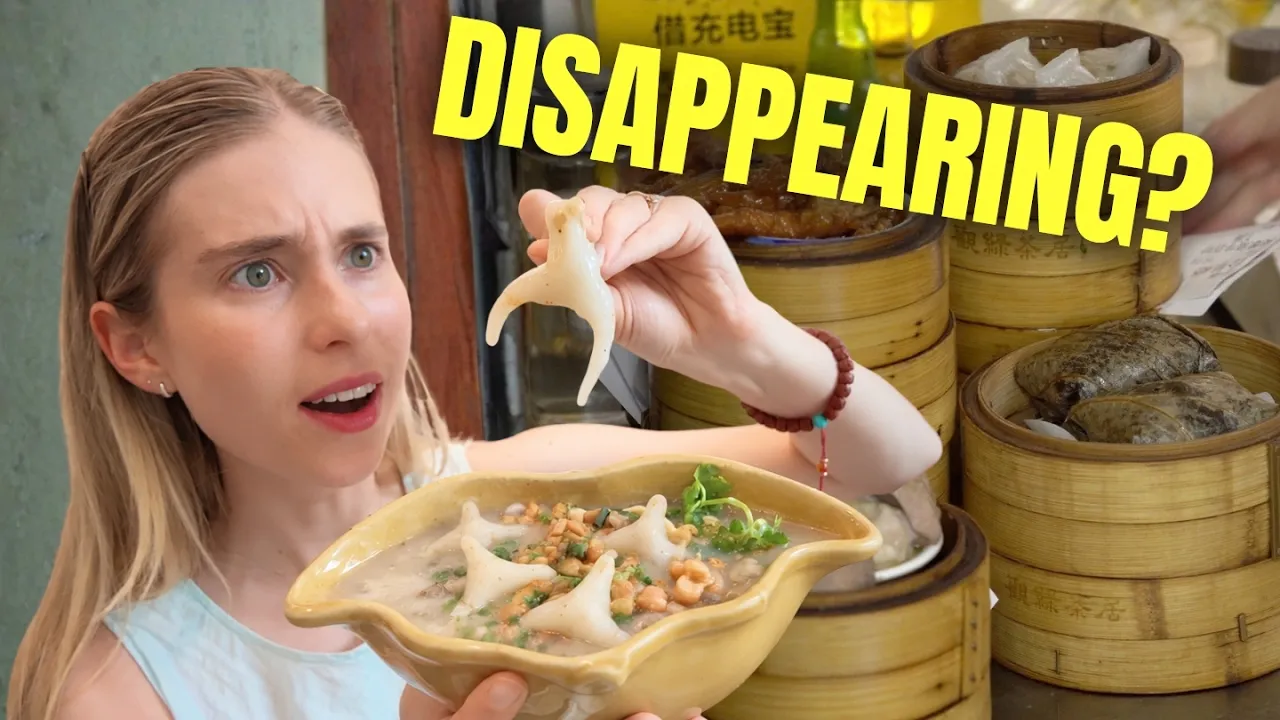
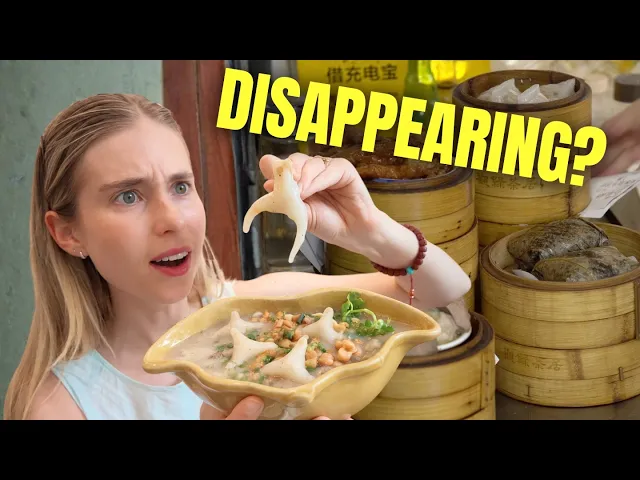
Amy and Peter also look for Shui Ling Jiao, a rice noodle shaped like a water chestnut. The video shows rice batter formed into three-pointed shapes with chopsticks. A first shop is too busy to make it; another says the wait could be up to an hour. Amy finds the noodles delicious and satisfying.
Cantonese revival dishes at China Hotel
For their final meal, Amy and Peter go to China Hotel, where a project with Guangzhou Museum brings dishes back from older Cantonese restaurant menus and recipes dating to the 1930s.
They try cold Baiyun pig trotter, seafood and vegetable wraps, and a shrimp dumpling in broth. Peter connects the pig-trotter dish's name to Baiyun Mountain. Amy finds the pig trotter good but says she probably would not order it again.
The video closes with reflections on the craft and labor behind the dishes and the difficulty of sustaining them when preparation is demanding and margins are small.
FAQs (From the traveler's perspective)
- Q: Why are disappearing Cantonese dishes in Guangzhou becoming harder to find?
- A: Peter says some dishes take time and skill to prepare, bring restaurants limited profit, and use ingredients that can be harder to obtain. He also says fewer young people are willing to learn the techniques.
- Q: What is cotton chicken?
- A: The Guangzhou dim sum dish shown has an unusually soft, airy chicken texture and is served with mushrooms and fish maw.
- Q: What is Shui Ling Jiao?
- A: It is a traditional rice noodle shaped like a water chestnut. The video shows rice batter being formed into three-pointed shapes with chopsticks.
- Q: How long could the wait for Shui Ling Jiao be?
- A: One shop was too busy to make it when Amy and Peter arrived. Another shop said the wait could be up to an hour.
- Q: Which dishes do Amy and Peter try at China Hotel?
- A: They try cold Baiyun pig trotter, seafood and vegetable wraps, and a shrimp dumpling served in broth as part of a project with Guangzhou Museum.