
Travel Guides & Tips in this video
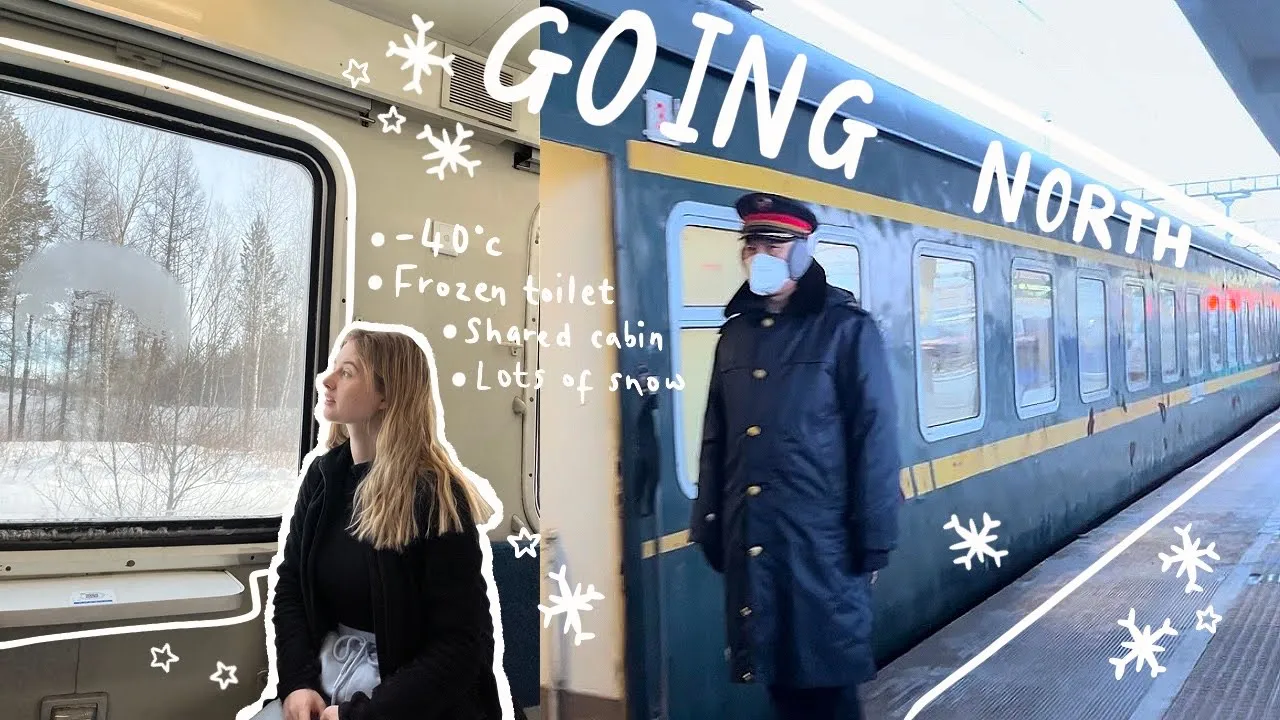
Soph and Michelle travel by sleeper train from the south toward Mohe, China’s northernmost town, on a 17-hour ride. After covering more than 3,000 kilometers and stopping in Hangzhou, Shanghai, Beijing, and Harbin, they board in temperatures around minus 30°C. Crowds gather at boarding, and they wear several layers to cope with the cold outside and the hot interior. They eat instant noodles because there is no restaurant car, struggle to reach bags on the top bunk, and find the toilet frozen. The trip also includes unusual disco-like lighting in another compartment and kind interactions with fellow passengers. At sunrise, snow-covered scenery changes the mood of the journey. They arrive in Mohe after a difficult but memorable ride through winter conditions.
Next travel video:

More about the current video:()

Boarding a winter sleeper train
Soph and Michelle board a sleeper train on a south-to-north journey toward Mohe, China’s northernmost town. Before this leg, they have traveled more than 3,000 kilometers and passed through Hangzhou, Shanghai, Beijing, and Harbin. The train ride lasts 17 hours, and the outside temperature is around minus 30°C. A crowd gathers to board, and they describe pushing as passengers try to find their places.
Inside, the temperature feels much hotter than outside. Soph wears three pairs of trousers and layers clothing for warmth when leaving the train. Reaching luggage from the top bunk is awkward, and they note the contrast between being warm in the carriage and cold at stops. The train has no restaurant car, so they rely on instant noodles for dinner.
Night, sunrise, and arrival in Mohe
The journey includes unusual disco-like lighting in another compartment, along with friendly interactions with fellow passengers. The train windows freeze during the night. In the morning, a sunrise over a snow-covered landscape turns the view into a winter scene, giving the travelers a calmer moment after the difficult night.
The train bathroom has limited amenities and is affected by freezing conditions. Soph finds it difficult to use, while getting belongings from the upper bunk is another challenge. The ride ends in Mohe, the northernmost town in China. The video frames the journey as more than reaching a destination: cold, crowded boarding, basic facilities, food, and the kindness of people on board all shape the experience.
Before boarding, Soph and Michelle have already traveled through Hangzhou, Shanghai, Beijing, and Harbin, covering more than 3,000 kilometers. This final leg feels like a real-life Polar Express as the train heads into China’s far north. Crowds gather to board, and the cold is severe, but inside the carriage the heat makes the layers uncomfortable. They describe how hard it is to reach luggage stored above the berth and how there is no restaurant car, which leaves instant noodles as the practical dinner choice.
At night, a frozen window and unusual disco-like lighting in another compartment become small details of life on the train. The bathroom has basic facilities and water affected by the cold. Despite the inconvenience, passengers are kind and curious, and the travelers enjoy those interactions. By sunrise, snow-covered land and bridges of ice provide a view that makes the long ride feel worthwhile. On arrival in Mohe, they see the trip as both a test of winter travel and a chance to appreciate the landscape.
FAQs (From the traveler's perspective)
- Q: What was it like on the sleeper train in minus 30°C weather?
- A: The outside was extremely cold while the train interior felt very hot. Soph says she wore three pairs of trousers to stay warm when outside and comfortable as the temperature changed during the journey.
- Q: What was the most memorable part of the journey?
- A: They remember waking to sunrise over snow-covered scenery. After the cold, frozen windows, and crowded boarding, the winter landscape provided a quieter moment on the way to Mohe.
- Q: What were the biggest challenges on the train?
- A: Using the frozen toilet was difficult, and reaching their belongings from the top bunk was awkward. They also had to manage the contrast between the hot train interior and the freezing weather outside.
- Q: What food did they eat during the ride?
- A: They mostly ate instant noodles because the train did not have a restaurant car. They recommend bringing snacks and drinks for a long journey when food choices may be limited.
- Q: What advice would they give for a similar trip?
- A: They recommend dressing in layers, packing snacks, and preparing for basic bathroom facilities. The trip included severe cold, a hot train interior, frozen conditions, and limited food options, though they still found the journey rewarding.
