Travel Guides & Tips in this video
Checkpoint Chaser takes viewers on a hot, rugged overland stretch from Turpan through the Flaming Mountains toward Hami and finally Dunhuang, tracing Silk Road desert landscapes and oasis towns. The episode combines scenery with practical travel challenges: scorching heat, long road days and a series of checkpoints. The ride through the Tian Shan foothills passes red sandstone cliffs, sunlit mountain layers and quiet desert stretches, with street scenes and a hotel providing a temporary stop between miles of highway. The travelers reach Hami, where traditional architecture appears and they consider a temple visit alongside concerns about animal welfare. Fueling at provincial borders is complicated by language barriers, and they need to pass through checks and explain their plans. The route also includes Mazha village, a window into Uyghur life, mudbrick houses and Buddhist caves that reflect layered histories. In Dunhuang, the riders visit Crescent Moon Spring, an oasis around a water source amid the dunes, and see Mingyue Pavilion. The spring and pavilion bring to mind rest stops for travelers along historic caravan routes. The episode closes with reflections on two intense days of riding, the Flaming Mountains, modern crowds and road development, with Yukie helping bridge communication gaps.
Next travel video:

More about the current video:()
From Turpan through the Flaming Mountains
Checkpoint Chaser's ride begins in the heat around Turpan and passes the Flaming Mountains on the way toward Dunhuang. The red sandstone catches the morning light, and the riders reflect on stories of travelers who once crossed the region. Long road days through desert and foothills test their focus. At provincial borders, fueling becomes difficult because of language barriers. A local contact can translate, or riders can carry simple phrases and a written explanation for officials.
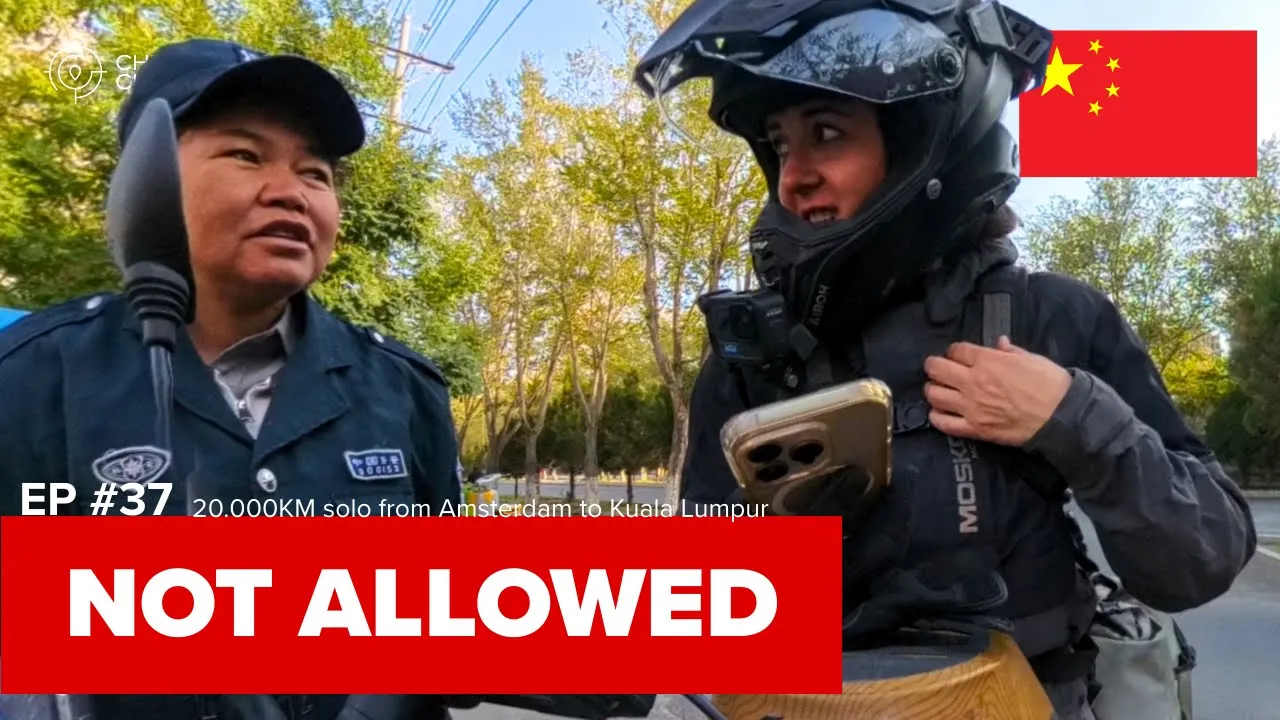
The route includes repeated checkpoints, where identification checks are part of travel through the borderlands. The riders need patience and a clear way to explain their purpose. In Hami, they see traditional architecture and consider visiting a temple, while weighing concerns about animal welfare. Their trip also passes Mazha village, with mudbrick houses and Buddhist caves that reflect layers of local history. Heat and humidity in desert towns make early starts, water and sun protection relevant to long riding days.
Dunhuang dunes and Crescent Moon Spring
The ride reaches Dunhuang and its dunes. Crescent Moon Spring and Mingyue Pavilion form the main stop, with a water source set among the sand. The riders walk through the site and reflect on how oasis settlements provided a place to rest for people traveling the Silk Road. They describe the spring's setting and pavilion, then consider how the landscape may have looked to earlier travelers.
Their visit also brings them into contact with modern crowds and ongoing road development. The contrast between historic caravan routes and today's travel stands out at the oasis. The episode includes their arrival in Dunhuang, a first look at the dunes and a tour of the spring site. It ends with reflections on two intense days of riding, the quiet beauty of the Flaming Mountains and the busy but distinctive oasis. Yukie helps bridge communication gaps along the way, and the riders look ahead to future adventures.
FAQs (From the traveler's perspective)
- Q: What challenges did the ride from Turpan to Dunhuang involve?
- A: The journey involved intense heat, long riding days and multiple checkpoints. Language barriers also made tasks such as fueling and explaining travel plans more difficult.
- Q: What is Crescent Moon Spring?
- A: It is a water source among Dunhuang's dunes, with Mingyue Pavilion beside it. The riders visit the site and reflect on its place along the Silk Road.
- Q: How did the travelers manage communication?
- A: Yukie helped bridge language gaps, and the trip showed that a local contact or written explanation can help when speaking with officials at checkpoints.