
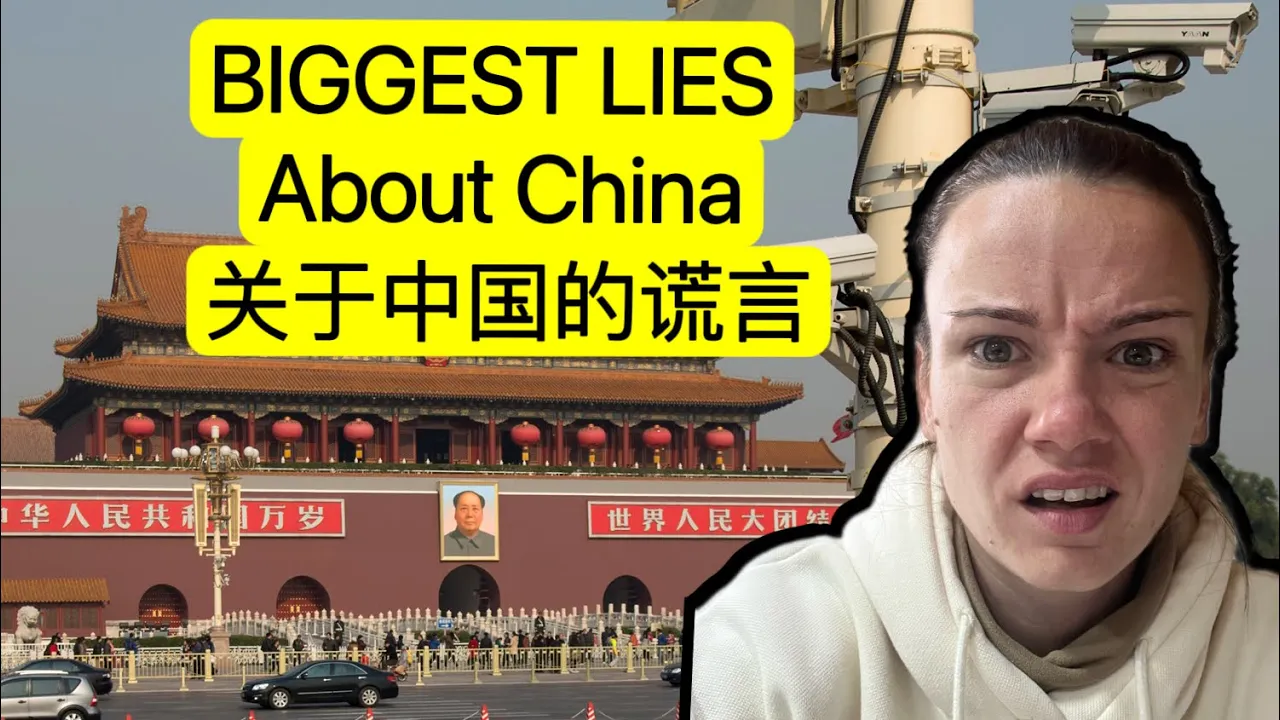
Travel Guides & Tips in this video
Lizzy, a South African YouTuber who says she has lived in China for more than five years, addresses seven narratives she believes Western media repeat about the country. She challenges depictions of widespread oppression, economic collapse, lack of freedom of speech, constant surveillance and unhappy citizens, while acknowledging limitations on speech. Her arguments draw on what she has observed: construction and business activity, conversations and social life, and her own sense of safety. She frames surveillance as a security measure and encourages viewers to question what they hear and seek varied perspectives. The video is her personal response to broad claims, not an independent survey of China's population or institutions. Her account focuses on daily life and her experience as a resident.
Next travel video:

More about the current video:(Published on 2024-05-25)

Lizzy's response to seven claims
Lizzy, a South African YouTuber who says she has lived in China for more than five years, responds to seven claims she believes Western media make about the country. The video discusses oppression, economic collapse, freedom of speech, surveillance, public happiness and government control. Lizzy draws on what she has observed in daily life and in conversations with people around her.
On economic collapse, she points to construction and business activity she has seen and to China's historical resilience. On freedom of speech, she acknowledges limits but argues that people have ways to express opinions and that she has observed open discussion. These are her views as a resident and her response to the narratives she describes.
Safety and everyday life
Lizzy addresses the idea that the government constantly monitors every action. She frames surveillance as a security measure and contrasts that claim with her own sense of safety. She also challenges the idea that people are broadly unhappy, describing social activities and people enjoying ordinary life. Her comments about safety and happiness come from her own experience and the people she encounters.
The video encourages viewers to question the information they receive and seek different perspectives. Lizzy's argument is organized around the claims she believes are misleading, with personal anecdotes and examples from daily life. She talks about the economy, speech, surveillance, government control and public happiness, while noting where she believes the claims do not match her experience. Her perspective is the focus of the video, alongside her observations of construction, business and social life in China.
FAQs (From the traveler's perspective)
- Q: How long has Lizzy lived in China?
- A: Lizzy says she has been living in China for more than five years. She draws on her experience as a resident when responding to the media narratives discussed in the video.
- Q: What is Lizzy's response to claims about freedom of speech?
- A: She acknowledges that there are limitations, while arguing that people still have ways to share views and that she has observed open discussion. This is her perspective rather than a complete assessment of every person's experience.
- Q: What does Lizzy say about surveillance?
- A: She challenges the idea that the government constantly monitors every move and frames surveillance as a measure intended to support safety. She bases the argument on her own experience and sense of security.
