
Travel Guides & Tips in this video
Ryan Shane Palmer visits the Terracotta Army in Xian, where crowds make the site challenging to navigate. He explores all three pits, including a smaller village-like area near the third, and looks at the life-sized soldiers, horses and chariots buried with Qin Shi Huang. He discusses the emperor’s rise and his choice of title, and notes that the figures were likely painted in multiple colors before the paint faded. Limited English information and filming among the crowds complicate the visit. Afterwards, Ryan tries fatty sausages, meat on a stick and tofu at a local market and browses the gift shop.
Next travel video:

More about the current video:()

Exploring the Terracotta Army
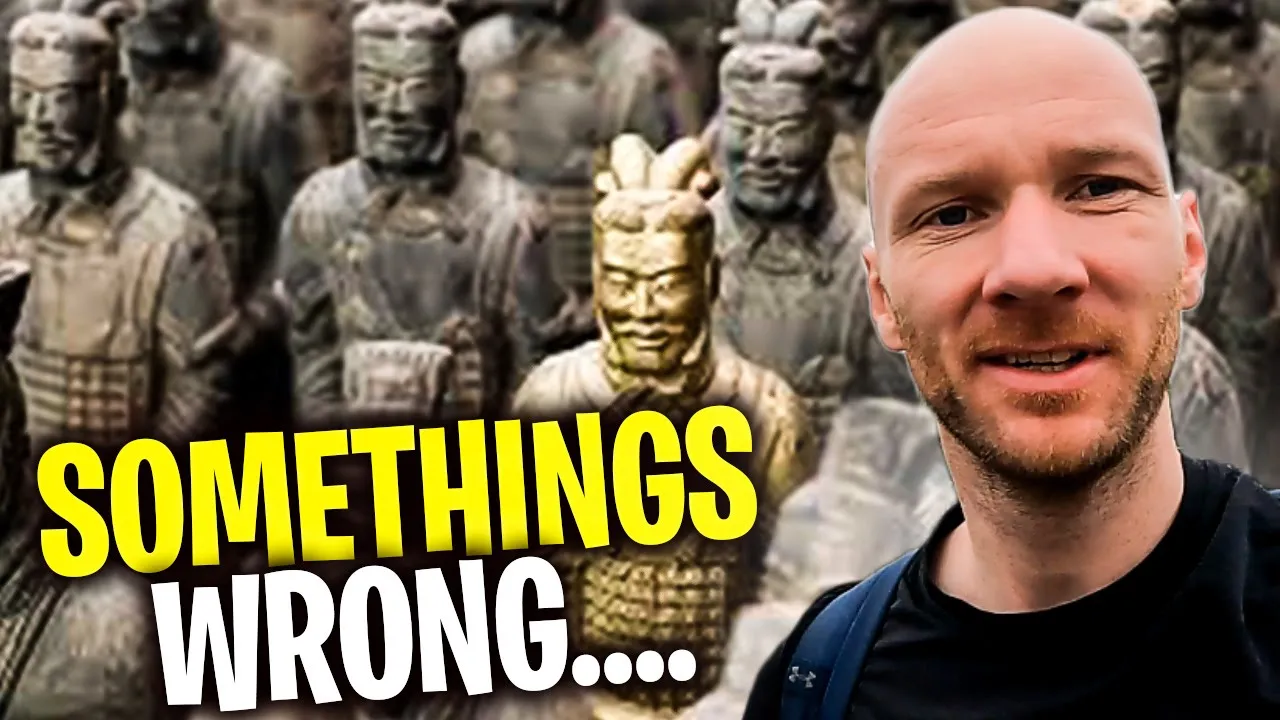
Ryan Shane Palmer visits the Terracotta Army in Xian, China, and begins among large crowds of Chinese visitors. He explores all three pits, each showing different parts of the site. The burial complex contains life-sized soldiers, horses and chariots placed with Qin Shi Huang, China's first emperor, to protect him in the afterlife. Ryan says Qin Shi Huang rose from the son of a wealthy merchant to become China's first emperor, and chose the title emperor rather than king.
The soldiers were likely painted in multiple colors when made, although the paint has faded. Ryan considers how different the figures may have looked before the colors disappeared. Near the third pit, he visits a smaller village-like area associated with the army. English information on site is limited, and the crowds make filming difficult, so he uses his phone to help with narration as he moves through the complex.
Market and exit
After the pits, Ryan visits a local market near the Terracotta Army. He tries fatty sausages, meat on a stick and tofu. He also notices glass casings around air-conditioning units, a modern detail near the historic site. The market adds a present-day food stop to a visit centered on ancient history.
Ryan finishes with the gift shop near the exit, which offers souvenirs ranging from small replicas to larger pieces. He takes time to browse after walking through the pits, market and village-like area. The visit also includes a look at glass casings around air-conditioning units, a modern detail that contrasts with the ancient burial site. The crowds and limited English information affect how he films and narrates his walk, but he continues through each area using his phone to help with the narration. He suggests visiting early in the morning or later in the afternoon to avoid the biggest crowds, allowing time for all three pits, the village-like area, the market and the shop. The visit balances the scale of the archaeological site with practical observations about crowds, limited on-site English information and filming conditions.
FAQs (From the traveler's perspective)
- Q: What is the Terracotta Army?
- A: It is a collection of life-sized clay soldiers, horses and chariots buried with Qin Shi Huang, China’s first emperor, to protect him in the afterlife.
- Q: What can visitors see across the three pits?
- A: Ryan explores all three pits, which present different parts of the army. Near the third pit he also visits a smaller village-like area associated with the site.
- Q: What was the army’s original appearance?
- A: Ryan says the soldiers were likely painted in multiple colors, although the paint has faded over time. He considers how colorful they may have looked when first made.
