Travel Guides & Tips in this video
BeeRose takes a 15-hour overnight trip from Ji'an to Beijing in a second-class sleeper carriage for about $80. She shows the six-person room, with top, middle and bottom bunks, and compares headroom, comfort and sitting space. The top bunk is cheapest but difficult for tall travelers, while the middle and bottom offer more room. The car has sheets, a blanket, a pillow, USB ports and a reading light, as well as Wi-Fi that works despite the train's speed. She points out storage beneath the beds and by the table, and narrow walkways shared by passengers. The bathrooms include squat and Western toilets. Food can be ordered using notices and QR codes, while attendants also circulate snack cards. She arrives in Beijing in the morning and weighs the affordability and experience against the speed and comfort of high-speed trains. She also points out the narrow passageways, two toilet styles and the ways passengers store luggage around the beds and table.
Next travel video:

More about the current video:()
Bunks and space in the sleeper carriage
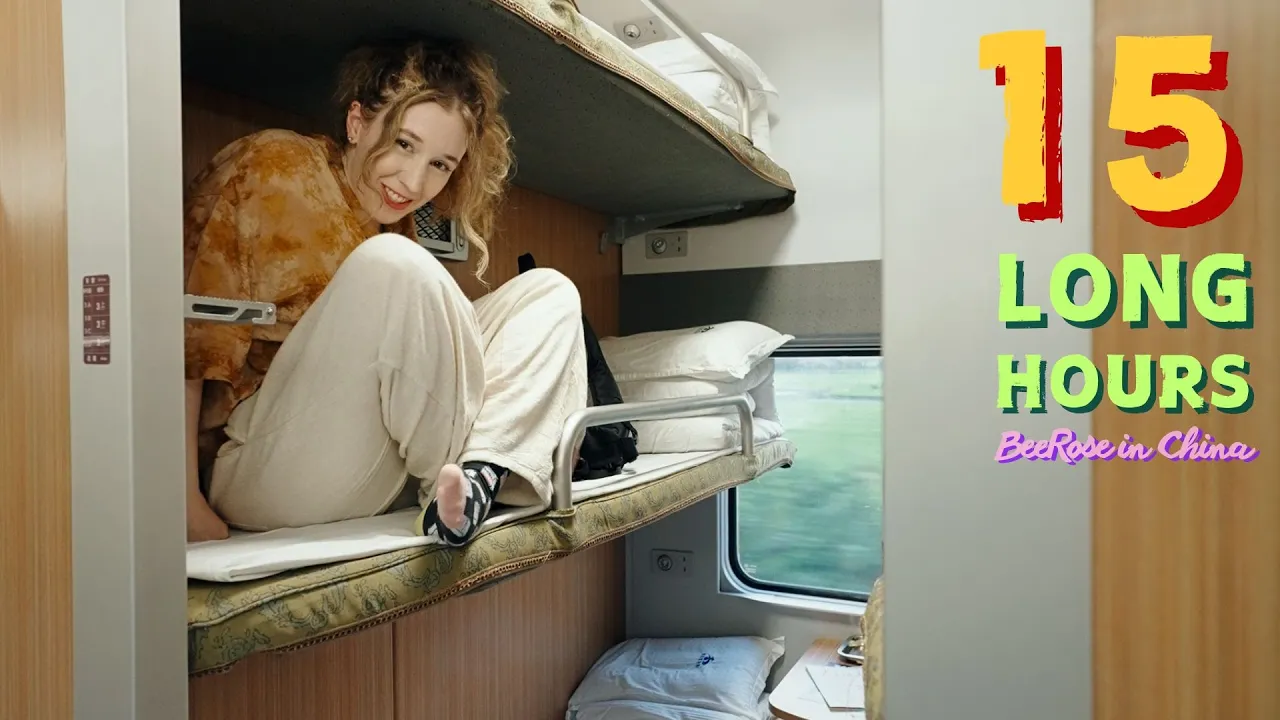
BeeRose travels overnight from Ji'an to Beijing in a second-class sleeper on a China Railway train. The journey lasts 15 hours and costs about $80. She explains that it is an older, slower train, not a high-speed service. Six passengers share a compartment with three bunks on each side. The top bunk is the least expensive but has little headroom, especially for someone over six feet tall. The middle bunk feels cramped for a traveler taller than 5 feet 7 inches, while the bottom bunk offers more room to sit and move. She demonstrates climbing into the upper bunk and advises tall passengers to consider the space before choosing.
Bathrooms, food and arrival in Beijing
The beds come with a sheet, blanket and pillow. BeeRose points out USB ports, a reading light, gentle air conditioning and storage under the beds and beside the table. Walkways are narrow, so luggage needs to be kept out of the way; the carriage is busy as passengers move around. There are both squat toilets and a Western toilet. Food can be ordered through notices and QR codes, and attendants circulate snack cards. The Wi-Fi remains usable, though the train is moving quickly. BeeRose describes a noisy night with children nearby and early morning conversation in the carriage. After arriving in Beijing, she recalls chilly early hours and an awkward moment brushing her teeth beside a shirtless passenger. Her conclusion is balanced: a sleeper can provide an affordable bed and an interesting trip, while high-speed trains are faster and more comfortable for travelers who prioritize comfort and time.
The middle bunk offers a little more headroom than the top but is still tight for someone taller than 5 feet 7 inches, and BeeRose says there is room to lie flat rather than sit comfortably. By contrast, the bottom berth gives her a place to sit and a view. The six-person room has three beds on each side. She shows how to climb to the top bunk and cautions about the low clearance. Passengers can keep bags beneath a bed and use a small space beside it for valuables, helping them navigate the narrow walkway. The journey is not silent: she hears nearby children and sees passengers moving through the car. In the morning, the early chatter and cold hours are part of her arrival experience.
FAQs (From the traveler's perspective)
- Q: Is the sleeper train comfortable for a long trip?
- A: It can be comfortable if you choose a bunk that suits you. BeeRose finds the top bunk cramped for tall travelers, while the middle and bottom bunks provide more headroom and room to sit.
- Q: What amenities were in the sleeper compartment?
- A: The compartment had six passengers, three bunks per side, sheets, a blanket, a pillow, USB ports, a reading light and storage under the beds and beside the table.
- Q: What food and bathroom options were available?
- A: The car had both squat and Western toilets. BeeRose says passengers could order food through notices and QR codes, and attendants circulated snack cards.