

Travel Guides & Tips in this video
Cami and Benjamin visit an ALDI supermarket in Shanghai and compare it with stores in Germany and elsewhere in Europe. They look at produce, ready-made meals, Chinese foods, dairy, bakery goods, snacks, drinks and frozen products. Their observations include plastic wrapping, local items such as ox tongue and rice cakes, and differences in the snack selection. At checkout, they learn that the store does not accept Visa and use Alipay instead. The tour offers a personal comparison of this Shanghai supermarket and the products they find there.
Next travel video:

More about the current video:(Published on 2024-11-14)
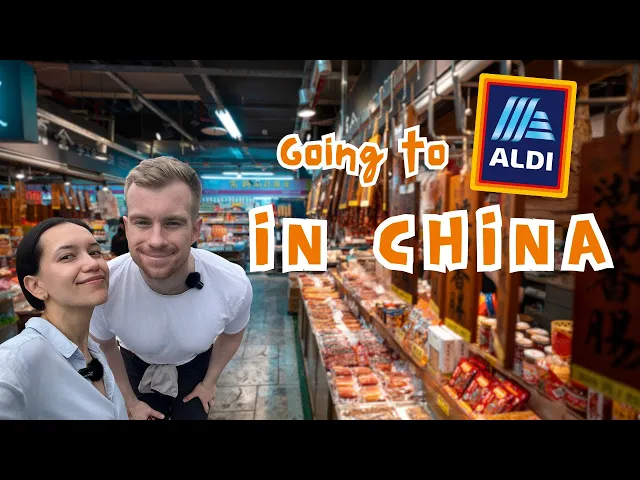
Exploring the Shanghai ALDI
Cami and Benjamin, a German-American couple, visit an ALDI supermarket in Shanghai. Cami compares the store with German supermarkets she knows, while both travelers look at how local preferences shape the products available. They begin with fruit and vegetables, where much of the produce is individually wrapped in plastic; they wonder whether this may be for sanitation. Magnetic security tags on some products are another feature they notice.
They continue through ready-made meals and Chinese food items, including ox tongue and rice cakes. The dairy section has familiar brands and local alternatives, but the couple find fewer choices than in Germany or England. In the bakery section they compare bread types and prices with stores they know. The variety of products reflects the differences they encounter between the Shanghai store and supermarkets in Europe.
Snacks, frozen food and checkout
The pair look through fresh food and drinks, crisps, snacks and frozen products. They note a greater emphasis on savory items and dried meats than they are used to, alongside international products. They also see many rice products and fewer pasta options, which they connect with differences in local diets. Their tour moves aisle by aisle through this particular store, with comparisons to their own shopping experiences rather than claims about every supermarket.
At checkout, their Visa card is not accepted, so they pay with Alipay. The couple point out that the mobile payment app is widely used in China, including at an international supermarket such as ALDI. They describe a mix of German and Chinese products and note how different the diets are between China and Europe. The store visit offers a practical example of both familiar products and local differences, ending with the payment process at checkout. The produce section also leads them to discuss how items are packaged and secured. Fruits and vegetables are individually wrapped in plastic, and some products have magnetic security tags. They wonder whether the wrapping is intended for sanitation and note the tags as a feature of the store. In the prepared-food area, they compare local meals with items they recognize from home. Their observations continue through dairy and bakery goods, where familiar brands appear beside local alternatives and the choice is narrower than they expect from Germany or England. The couple comment on bread types and prices as they browse. The snack aisles offer another contrast: they find savory products and dried meats alongside international brands. Frozen food and fresh drinks complete the store tour before they reach the checkout. There, the rejected Visa card leads them to use Alipay. Their experience illustrates the difference between this Shanghai shop and the supermarkets they know, including the products, packaging, payment methods and emphasis on rice and savory snacks.
FAQs (From the traveler's perspective)
- Q: What surprised you most about the ALDI in Shanghai?
- A: Probably the huge variety of local Chinese food and snacks alongside the German products. And that they didn't take Visa.
- Q: What were your thoughts on the dairy section?
- A: It was interesting seeing a mix of familiar brands and local options. Not as many choices as in Germany or England though.
- Q: What was your overall impression of the supermarket?
- A: It was really cool to see the blend of German and Chinese products. It showed how different the diets are between China and Europe.
