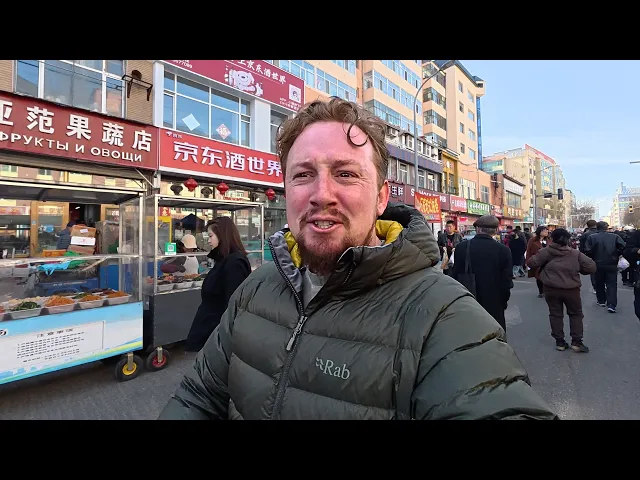
In the far, far north of China, right on the border between China and Russia, lies a region with a very interesting history. This is an area that used to be controlled by the Russians. Harbin, one of China's major cities, used to be majority Russian; and there are towns where you'll find an unexpected minority group: the "Russian Chinese", people of Russian descent who only speak Mandarin!
Let's embark on a journey to learn about fake Russian import shops, the size of Russian-Chinese sausages, and how the locals view interracial marriage. This was my final stop in China.
Sabbatical travels Harbin’s borderlands, tracing Russian influence in architecture, food, and the little-seen Russian-Chinese minority. The episode weaves a mix
Travel Guides & Tips in this video
Sabbatical’s Harbin episode dives into the northern borderlands where Russia and China collide culturally and historically. The video begins with a sunny, curious introduction to Harbin’s famous Russian Orthodox church, then showcases a playful but insightful lens on Chinese cosplay of Russians and the enduring Russian influence in architecture, language whispers, and local food. The narrator explores a former Russian-majority city history, the prevalence of Russian import stores, and the curious phenomenon of “Russian Chinese” minorities who look ethnically Russian but speak Mandarin and belong to China’s recognized minority groups. The trip moves northward toward remote towns along the Amur border, where he meets a taxi driver-turned-guide, witnesses border dynamics, and samples local life—from babushkas to kvass, to a border-town restaurant with bilingual signage. Interwoven are reflections on politics, memory, and identity, punctuated by humorous, humane encounters with locals and,
Next travel video:
38 min
2026
China's Secret North: Harbin's Russian Chinese Border Towns
In the far, far north of China, right on the border between China and Russia, lies a region with a very interesting history. This is an area that used to be controlled by the Russians. Harbin, one of China's major cities, used to be majority Russian; and there are towns where you'll find an...
Journey to China's hidden north! Discover Harbin, a city with a Russian past, and towns where Russian descendants speak only Mandarin. Explore unique shops, unusual sausages, and local views on marriage. This video is the traveler's final China stop, promising a fascinating glimpse into a lesser-known cultural blend.
Attractions in this video: Russian Orthodox Church, Synagogue, Russian Import Stores, Kvass, Russian-chinese Minority
More about the current video:(Published on 2025-04-07)
In Harbin, Sabbatical introduces the borderland where Russia and China meet, highlighting a deeply Russian-influenced city that’s now largely Chinese-speaking. The walk through a former Russian-majority era reveals Russian orthodoxy, old synagogues, and Russian import shops that may be local-made products. The traveler notes the presence of “Russian Chinese” minorities who look Russian but speak Mandarin and belong to one of China’s 56 ethnic groups, then heads to remote northern towns to meet residents and a driver who shares stories of border life. The journey touches on historical waves of Russians moving into northeast China, the Maoming era upheavals, and the enduring cross-border ties along the Amur River. The video blends travelogue with commentary on media perspectives and the value of big-picture world understanding via Ground News, before returning northward to the border village of BeNiJang and reflecting on end-of-series themes and what lies beyond the border. Sabbatical is named 1–2 times as the traveler, and the narrative is laced with intimate local moments, quirky anecdotes, and a sense of discovery about a difficult-to-see layer of China.
The piece closes with a sense of completion and anticipation for more boundary-crossing travel, ending with the idea that the journey across China is far from over, with the Pacific still ahead and borders to cross.
Note: This summary preserves the traveler’s voice and the vivid, interactive encounters that define the Harbin episode while emphasizing the cultural layering of Russians in northeast China and the ongoing border-life narratives.
The narration also emphasizes the unique rural northern China vibe, a few humorous missteps, and the reflective mood of finishing a long cross-country exploration.
The traveler’s name is Sabbatical, mentioned briefly as perspective on the journey and experiences along the borderlands. It also references the ongoing curiosity about how identities blend in a place where borders and cultures meet.
FAQs (From the traveler's perspective)
Q: Who are the Russian-Chinese minority in Harbin area?
A: They are people of Russian descent living in China who may look ethnically Russian but are Mandarin-speaking and belong to a recognized Chinese minority group.