
Travel Guides & Tips in this video
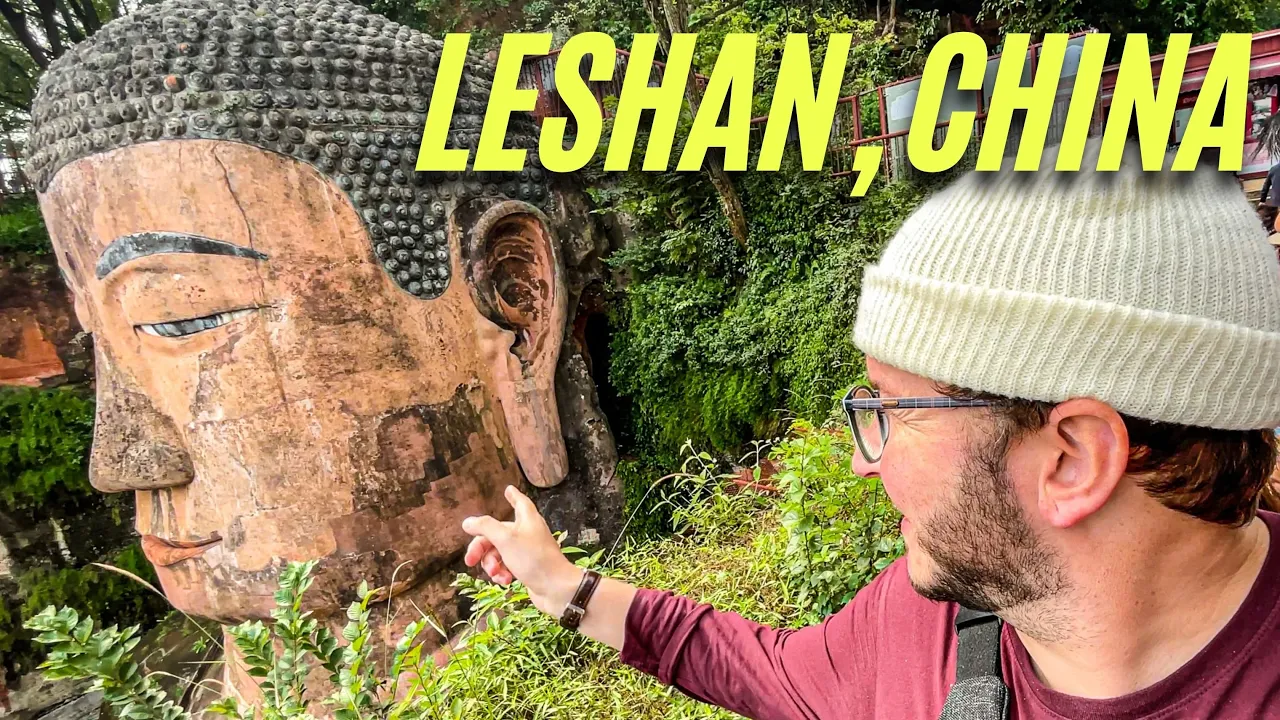
Lewis Crampton visits Leshan to see its Giant Buddha and a series of cave carvings. The 233-foot statue was carved into a cliff over 1,200 years ago, with construction lasting 90 years from 713 AD to 803 AD to improve river navigation safety. He also sees a 170-foot cave Buddha, the 10,000 Buddha cave, and a 560-foot sleeping Buddha. The region is described as an early center of Buddhism in China, and the Giant Buddha includes irrigation systems intended to prevent erosion. The trip ends at Ling Yun Temple.
Next travel video:

More about the current video:()

Leshan’s Giant Buddha
Lewis Crampton explores Leshan, China, focusing on monumental carvings and the people who created them. The visit begins with the Giant Buddha, a 233-foot statue carved into a cliffside. Construction took 90 years, from 713 AD to 803 AD, and aimed to improve safety for boats navigating the river. Lewis emphasizes the scale by comparing it with modern statues and the Statue of Liberty. He also points to irrigation channels built into the statue to help prevent erosion, showing how its design served both artistic and practical purposes.
The exploration continues through caves with additional Buddhist carvings. Lewis visits a 170-foot cave Buddha and then the 10,000 Buddha cave, where stone figures represent Buddha’s path to enlightenment. The number and detail of the carvings surprise him, extending the visit beyond the main statue. He also discovers a sleeping Buddha measuring 560 feet long while exploring the cave system.
Buddhist history and the temple
The video connects the carved figures with the wider history of Buddhism in China. It describes the region as an important place where Buddhism first spread in the country and where the first Buddhist temples were built around the first century AD. The Oriental Buddha Park is a separate attraction near the main Buddha, and the source gives its entry cost as 80 Chinese Yuan. Lewis also visits Ling Yun Temple, which adds another religious and historical stop to the day.
The route involves navigating challenging terrain and moving among the caves and Buddha sites. Lewis notes moments of peace and quiet despite the activity around the main attraction. He encourages allowing a full day to explore the area, including the cave carvings, the park, and the temple. His account moves from the giant cliffside statue to smaller detailed figures and the long sleeping Buddha, showing how Leshan’s religious art and engineering are spread across several locations. The visit presents the Giant Buddha as one part of a broader landscape of carved figures and Buddhist sites.
FAQs (From the traveler's perspective)
- Q: How long did it take to build Leshan’s Giant Buddha?
- A: Construction lasted 90 years, from 713 AD to 803 AD. The project aimed to improve river navigation safety.
- Q: What other Buddha carvings did Lewis see?
- A: He visited a 170-foot cave Buddha, the 10,000 Buddha cave, and a sleeping Buddha described as 560 feet long.
- Q: What does the source say about the Oriental Buddha Park?
- A: It is a separate attraction near the main Buddha, with an entry fee of 80 Chinese Yuan.
